

As a kid I remember moaning to my mother about being bored. I remember long afternoons just sitting on the sidewalk with my friend Peter, wondering how to pass another day. It was the early 1980s and the only screens worth watching were Saturday morning cartoons on our clunky family TVs.
Thinking back to those boring days, Peter and I were always up to something. After 20 minutes tossing pebbles on the asphalt, a plan would hatch. Some days we’d build a fort in the local woods, on others we would dress up as characters from whatever movie we’d recently seen in the cinema (a Kellogg’s Cornflakes box wrapped in a black refuse bag makes a surprisingly accurate Ghostbusters backpack … or so we thought). There were days we’d make up and perform plays, go off on cycle adventures, or start micro-enterprises, positive we’d make our millions any day soon. We basically lived a ‘Stranger Things’ childhood, without the Demogorgon.

The point is we were bored, and from that boredom came a natural curiosity and creativity, something that is perhaps lacking and of significant social concern for our deeply digital society today. Today’s children and teenagers never get to be bored, screens occupying every moment of downtime. This has serious consequences for the creative spirit.
The Impact of Constant Connection
4, 28, 14, 2, 104, 9. These are not the lottery numbers. Sadly, they are far more depressing.
4 – The average number of hours we spend on our smartphones per day. Up to 7 for teenagers.
28 – Taking an average week, 7 days X 4 hours = 28 hours spent per week on your smartphone.
14 – The average hours available to us a day, outside of eating, bathroom etc (an 8am-10pm day)
2 – 28 hours spent on your smartphone a week = 2×14 hours – 2 days per week spent on your device
104 – 2 days a week x 52 weeks of the year = 104 days a year you are wasting swiping and scrolling
9 – Over an average 30-year time-span, you will have wasted 9 years on your device. NINE YEARS!

Now before you all get too depressed, remember that some of that time is productive screen time. Replying to emails on the train in the morning is productive, getting ahead of your day. Some of that time is Spotify, listening to music and informative podcasts. But you also know that a lot of it is also time wasted, mindless scrolling. Screens dominate our daily lives and there are serious consequences. For most, smartphones are killing creativity.
The Chain of Creativity

There is a simple chain of consequence at play here. Boredom leads to curiosity, curiosity is essential for creativity, and creativity is the fuel of the innovation engine. So, working backwards from our desire to be innovative brands and businesses, we naturally require creative talent. Talent that is inherently curious in their outlook and approach, and that curiosity needs boredom to be allowed to gestate. Boredom and curiosity are inherently linked.
As Bhadu said “if necessity is the mother of all invention, curiosity is its father”. Curiosity is the spark that ignites our creativity. It is naturally explorative in nature. It is not curiosity if the outcome is already known. It is not curiosity unless there is learning, play, mischief, a sense of wonder or exploration at work, all key elements of the creative spirit. It is in this explorative and open mindset that creativity flourishes.
It is the active seeking of an alternate perspective that nourishes the creative soul. It is the moment Robin Williams encourages his students in Dead Poet’s Society to stand on their desks, to see the world from that different perspective. Curiosity is an active state, but in modern society is a state you have to seek out and create.

The Power of Curiosity
Tommy Tiernan, a famous Irish comedian and one of the most authentic, curious and generous talk show hosts you will ever witness, once conducted a month-long brave experiment as a performer. In 2015, as part of the Edinburgh Comedy festival, his one-hour show was entirely improvised in the moment. Unlike other comedy improvisation shows (where the audience shout ideas and the performer ad-libs comedy on that basis) his show did not involve his audience. He simply walked out on to the stage every night, without notes, direction or any idea of what he would say. One man and a microphone. No rehearsal, no script, no expectation. His only rule was that whatever he said had to be created in that moment, and that he could not use any stories, jokes or observations from any previous shows. It all had to be new every night.
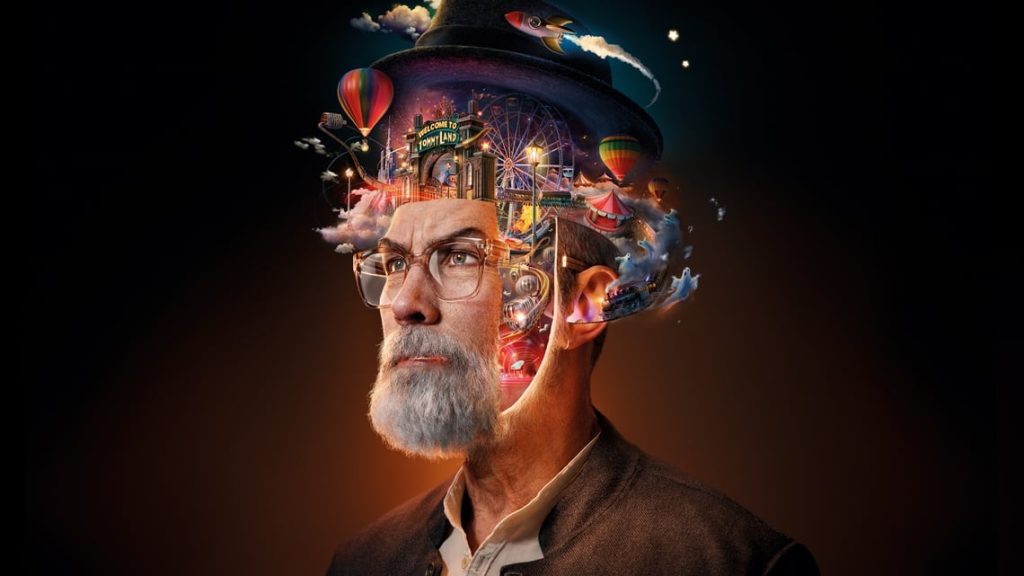
It remains possibly one of the most vulnerable and curious approaches to live performance I have ever come across. Tommy was interested in the power of curiosity. What would happen when you stripped away the script, the rehearsed set, when you just learned to trust the curious and creative mind? What would be created if you allowed the vacuum to exist? What would be created if you were led by curiosity and vulnerability? Every night would start with him looking into the void, reading the audience. Some nights were magical. Others were probably a slow unfurling disaster. Such is the nature of the explorer. You never know what is over the next hill.
Interestingly, Tommy now hosts his own highly successful TV chat show, his interviews astoundingly intimate and exploratory. His secret? Unlike all other chat shows, as a presenter, he has no idea who his guests will be.

They remain hidden behind a curtain and walk out and sit in the chair. Tommy has no notes, no time to prepare, no researchers providing a list of acceptable questions. Sometimes it will be a famous guest we all know, other times an average citizen who has a story or interesting experience to share. Tommy starts from zero with everyone. Every conversation is naturally curious. Strip away the script and the shared conversation is always deeper. Having learned in Edinburgh that curiosity creates magical moments, 9 years on Tommy Tiernan remains curious.
Fostering a Culture of Curiosity
Google have their 80:20 rule, employees encouraged to spend 20% of their work time on personal interest projects outside of their regular work. They understand that encouraging and fostering a sense of curiosity is key to creativity.

So how do we foster this sense of curiosity, in ourselves, our children, our teams, in our organisations? We also need to allow ourselves to step into the void. We need to reconnect with boredom. My own definition of creativity is ‘the production of something from the nothing’. When you sing in the shower (badly) your notes come from the nothing, silence becomes a song. When you drag a pencil across a blank page, no matter how bad the sketch or self-portrait, a drawing appears from the whiteness, an image from the invisibility. To create something, we have to start with the nothing, bringing us back to the importance of boredom.
Boredom is Not a Lack of Imagination
Defining boredom is difficult. My grandmother used to say that “boredom was just a lack of imagination”. She was both right and wrong (she was a quantum granny). In fact, boredom provides access to the imaginative mind. It is a catalyst, a motivating force. It is not apathy (which is a negative passive state). Boredom is about the potential, the possible, a positive active state. Boredom is not a negative thing, as society would have you believe, a waste of time. Boredom is a teacher, a guide, a quiet mentor.

When we are bored our brains start to wander, entering daydream state, default mode. It is the same when we sleep. Our brains ‘at rest’ sort through all the new data. In terms of making important decisions, how many times have you heard/said “let me sleep on it”? The expression is rooted in the reality that our brains, in default/rest mode, are at their best for problem solving and original thought. Without focused cognitive engagement, the brain is free to sort, to wander. Remove the focus on external goal-oriented tasks and the imagination floods in. It is why our dreams are often so weird, wonderful and unpredictable. Our brains, freed of their goal-oriented thinking, shake lose their shackles and wander.
Creative Minds at Rest
We need to rest. Every athlete understands the importance of rest. As hard as they train, they know that without resting the body, they will not reach peak performance. We too, have to re-learn how to rest the mind, how to be content with letting the mind wander. Into that space comes curiosity and creativity.

In 1990, JK Rowling was on a 3-hour train from Manchester back to her home in London. As she looked out the window, a random idea popped into her head, of a young scraggly haired boy who went to a wizard school. Without a pen, and too shy to ask to borrow one, she spent the next 2 hours looking out the window thinking about this idea, mulling it over, her mind in exploration mode. If she had had a smartphone on that train, and the latest series of Succession playing on Netflix occupying her, Harry Potter may have just remained a 5-second fleeting idea, disposed of as she pressed the ‘next episode’ prompt. How many ideas are lost, never born, or lie half-formed because we have not given them the space to gestate?
Staying with writers, Wordsworth and Robert Frost were both famous for walking, acknowledging that their poems and word syntax would ‘come to them’ as opposed to being forced onto a page. Boredom was also a catalyst for the writing process itself with Agatha Christie once saying that there was “nothing like boredom to make you write”. Kate Nash, the singer/songwriter, more recently mirrored the same opinion where she acknowledged that as a teen she wrote because “there wasn’t much else going on”.

Smartphones are Killing Creativity
Our smartphones have stolen our downtime, our boredom. As a teenager, do you know what I did when I was waiting for a bus? Nothing. It was just me and my thoughts. When I was on the bus, I looked out the window, curious as to the world passing by. Today, at every opportunity, we turn to our devices. The moment, and I do mean the very moment we are alone with our thoughts, we immediately turn to occupy ourselves with our device. Tik Tok, You Tube, Instagram, Snapchat, Netflix, Spotify, Tinder, WhatsApp. Our email, our messages, our newsfeeds. How many of you bring your device with you when you go to do a poo? Apparently, most of us. How sad is that? As comical as the uniformity of that answer is, that we can’t even be present in our own thoughts for the few moments it takes to do a poo, the reality is disturbing.
The earphones go in while out walking, on the treadmill in the gym, even underwater headphones for swimming. Podcasts to occupy us, music to distract us. How about this for a test? Leave your earphones at home and just be. Let your brain go where it goes. Be bored. Take a walk where you know. Walk the same route so there is nothing new to see, nothing to draw your mind into cognitive focus. Let your brain roam free. Stop and sit on a park bench with no purpose. Just sit there.

We are no Longer Bored
Mindfulness is on trend today, a relatively new concept being shared and encouraged in books and podcasts to a stressed, anxious society. Why? Why now? My grandmother (the other one, not my quantum granny mentioned above) had 7 children in the 1940s. Before she got her first washing machine in the 1950s, my father remembers her slaving all day, washing clothes, wrangling, drying, ironing, cooking, cleaning. While automation thankfully freed up this significant tortuous workload for the modern parent, my guess is my grandmother did not have to seek out mindful moments. Everything she did, she was present in that moment, her mind going where it went (probably mainly relating to strategies to avoid having an 8th child!)

Today we have machines to wash and dry our clothes. But we also have automated anything else that we would have spent some mindless brain time doing. Robots now vacuum our homes, robots cut our lawns. Instead of cooking, 20-30 minutes mindfully preparing a meal and being in that moment, we reach for Just Eats or the Grub Hub app. Automation and the digitisation of society has eroded mindfulness and boredom.
So, our next generation (and ourselves) are no longer bored. Every moment is spent swiping, consuming content, digitally immersed. With the coming Metaverse, this will only get worse. The children of today will build less forts, put on less plays, fail to find the beauty in spending a day making a (bad) Ghostbusters costume. Or if they do, they will lose this curiosity in their teenage years, a direct correlation evident between increasing smartphone hours per day and curiosity, creativity and exploration.
The Devil Will Find Work for Idle Hands to Do

So, what do we do? Firstly, we acknowledge the issue. Instead of just continuously talking about the ‘screen issue’ we do something about it. We disengage from our own screens. We become more active in allowing ourselves to get bored. We stop bringing our phones to the bathroom. We utilise the digital wellbeing apps and tools on the device, limiting our scrolling time. We stop putting in our earbuds everywhere, stop downloading Netflix and Disney+ content to watch when on the move. We learn to be present. We make time for daily meditation (and do not get upset when your mind wanders, that it the point, let it wander). We re engage with non-digital hobbies through which we enter flow state. Gardening, knitting, surfing, running (but no earbuds).
As parents, we stop trying to fill our children’s days with activities and allow them to get bored. Don’t let them use a screen to fill the boredom and sometimes, don’t help them. Let them fill the time themselves, let them explore, let their imagination do the work.
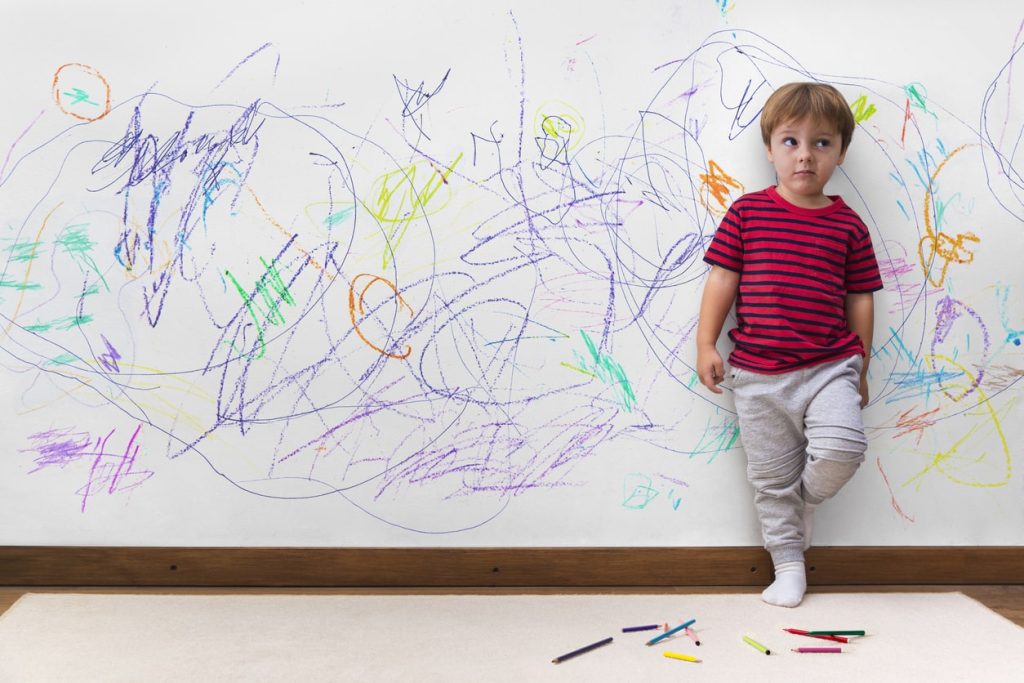
And the same goes for your team, your employees. Give them the time and space to think. Encourage mindfulness practices and programs. Think about that Google 80:20 idea and wonder how it might look for your organisation? If you are serious about innovation and creativity, you have to allow your talent the time and space to ideate.
“The Devil will find work for idle hands to do”. An old 15th century English expression that points to the fact that children or teenagers (or anyone really) would find trouble if not otherwise occupied. That is, it was best to keep children busy or they would only get up to mischief. Bring on the mischief is what I say. The Devil is welcome to inspire some mischief into those hands, as long as we can pry the screen out of them.
At this stage of my life, I’ve accepted I’m probably already going to hell …in fact I’m likely to be driving the bus. As a fellow mischief maker, I look forward to having you on board!