The final season of Stranger Things landed just in time for Christmas viewing and buried inside it is a perfect metaphor for modern CX. But before we dive straight in, first some Christmas context.
Every December we gather in living rooms lit by fairy lights, force our pets into festive jumpers, and let Bing Crosby haunt every retail space for weeks. We reenact the same rituals – watch the same movies, play the same board games, bake the same treats, all as if they were deeply encoded into our DNA.
But of course, beneath all the tinsel and chaos lies the true meaning of Christmas: connection.

For all its commercial clutter, Christmas is fundamentally a story of drawing people closer. After a year spent spinning in different directions, we are pulled back into each other’s orbit. It reminds us that humans are not meant to live disconnected lives and that loyalty, belonging, and togetherness remain our North Star.
And why would brand relationships be any different? Loyalty is not earned through clever discounting, but through consistent emotional investment.
In many ways, Christmas is a Customer Experience masterclass.
Think about your favourite Christmas traditions. It is rarely the shiny stuff – the gifts, the wrapping paper, the overspending that haunts you in January. What matters are the rituals.
It is the same movie watched every Christmas Eve. The cold-water morning swim. The odd trifle your eccentric aunt insists on making. The late-night charades that inevitably go off the rails.

Christmas comforts us because it’s predictable, emotional, and shared.
And it is these aspects that modern CX so often forgets.
Brands obsess over novelty, always focused on the new campaigns, new journeys, new features, when what humans crave is rhythm.
To build loyalty, you must build ritual.
A brand becomes part of someone’s life when what you do is consistent enough to trust, but meaningful enough to cherish.
Starbucks didn’t originally build loyalty through coffee; they built it through store ritual.
Apple didn’t build loyalty through phones; they built it through identity.
Taylor Swift didn’t build the Swiftie Army through music; she built it through belonging.

Christmas teaches us that loyalty is a place people return to, not a price they respond to. Your brand can be that place if you lean into what makes Christmas magical: anticipation, familiarity, emotional moments, and shared meaning. Look to dial-up each of those elements in your CX.
Most brands try to earn loyalty. The smarter move is to build it.
But back to the title of this article. If Christmas shows us how loyalty might feel, Stranger Things shows us how loyalty works: messy, unpredictable, shaped by invisible forces most brands ignore.
Here are three CX-relevant insights you can take from the Christmas release of Stranger Things, Season Five.
1.The Upside Down is their Reality
The citizens of Hawkins think they understand their world until a crack appears, noises echo from nowhere, shadows warp, and unseen forces begin rewriting reality.
This is what a PHYGITAL brand–customer relationship is like today.
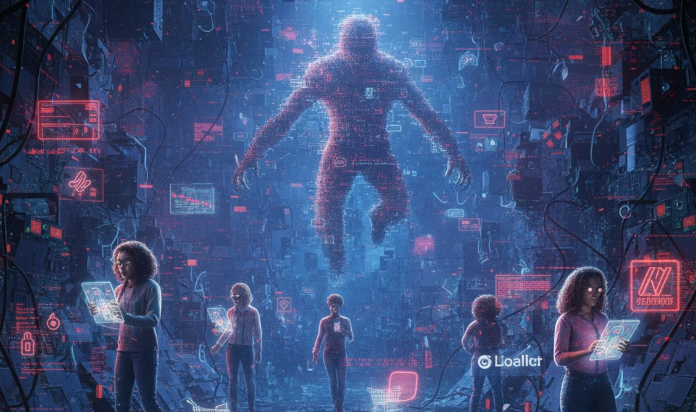
Your customers live in two worlds:
- The Real World – where they live, work, study, travel, buy
- The Upside Down – their digital subconscious where algorithms shape desires, communities shape identity, and loyalty forms long before you ever see them in-store.
Across each season of Stranger Things, the ‘Upside Down’ occupies more and more screen time, the characters spending more time in that alternate reality. So too in life: your customer’s perception of your brand is shaped in their digital Upside Down long before they meet you in the real world.
Digital dominates.
A single DM can build or break a brand. A viral TikTok review can send sales soaring or sinking.
A Reddit thread saying, “Avoid them, terrible experience,” spreads faster than any ad you’ll ever buy. And for most consumers, digital is now their primary discovery and perception channel.
The Upside Down isn’t an alternate reality anymore. For many it is the primary one.
This means we have to up our digital strategy, moving away from efficiency, frictionless, and convenience, towards using digital to engage and build emotive loyalty.
Perhaps the real world is merely now where brands collect the consequences of digital interaction and investment.
2.Engage with Empathy
To survive this dual reality, you need your own team of Elevens – emotionally literate brands.
Eleven doesn’t defeat Vecna or the Demogorgons with brute force. She wins because she feels. She senses danger. She understands what others don’t.
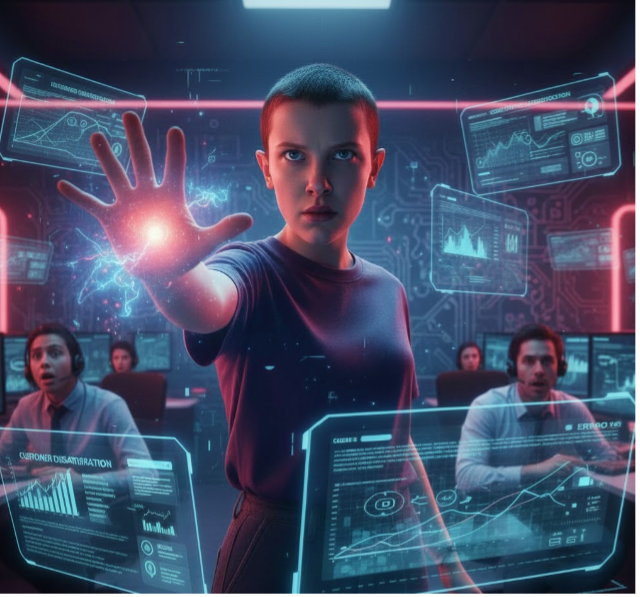
This is the new competitive advantage in CX: empathic intelligence.
Not AI but EI.
Empathy is how you build loyalty in a world increasingly digital, automated, and commoditised.
Ask yourself: Where in our customer journey could we engineer moments of empathy?
Not superficial delights. Not more efficiency. Not friction-removal for its own sake.
Real empathy.
“We know this is stressful and we’re here for you.”
“We know you’re uncertain, so we’ve made it safer to choose.”
“We know this matters to you, so we’ve elevated it.”
“We know you’re frustrated and so we’ve made it easier for you to be heard.”
In Stranger Things, Eleven bends reality.
In CX, empathy bends experience.
Recruit for and foster empathetic response in CX talent.
3.Stop the Leaks
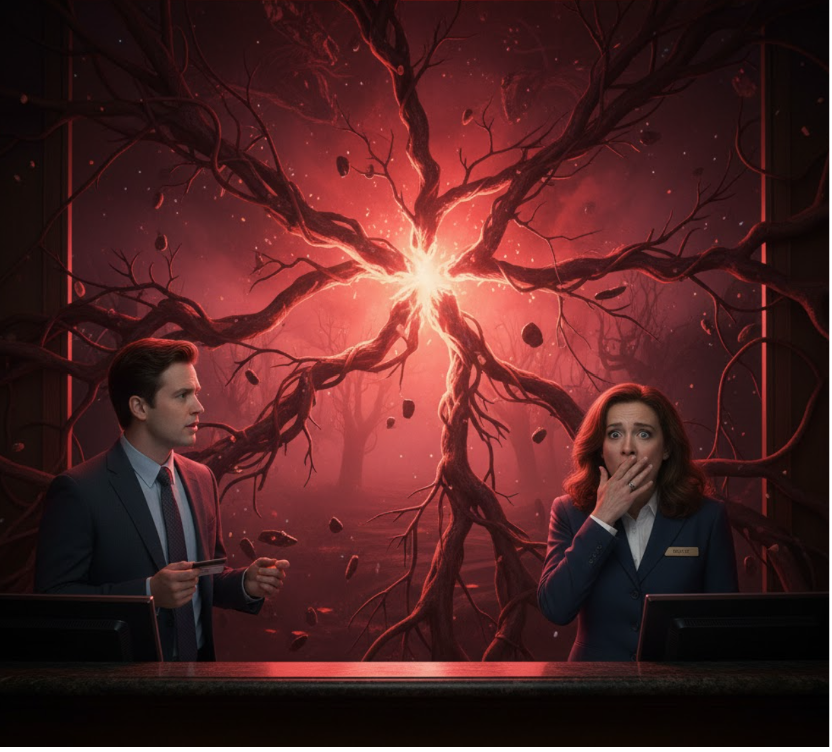
One of the show’s core tensions is that the Upside Down keeps trying to break through. Cracks form, gateways open, creatures slip out.
Your CX works the same way.
Every unresolved pain point for a customer is a crack in your loyalty reality. Every under-trained employee is a gateway to disappointment. Every broken digital step is a creature waiting to destroy trust.
The Hawkins kids survive because they:
- listen for small noises
- investigate anomalies
- respond fast
- trust what the data is telling them
- communicate endlessly
- prepare before something goes wrong
CX becomes a horror story only when you stop paying attention to that list above yourself.
Loyalty gets lost in the cracks.
It is why CX is an obsession, not a function. To stop any cracks, you must be customer obsessed. Passionate about addressing and preventing them.
Today, we need to meet our customers where they are.
Today’s loyalty is built in both the real-world and in their digital ‘upside down’. The challenge is to engage with emotion and empathy in both realities.
AI will give you the scale of connection you are looking for, but only when you lead-out and implement with an eye on empathy and emotional engagement will you get the depth of connection you seek.
If you have never watched Stranger Things, the above content will have made little sense. That alone should be your cue to binge all five-seasons over the Christmas holidays.
If anyone tries to move you from the couch, tell them it’s ‘work research’.