

As of January 1, 2025, with the arrival of Generation Beta, we are witnessing a historic milestone: seven generations of consumers coexisting for the first time.
For brands and business owners, this presents a unique challenge and opportunity.
It means navigating seven distinct consumer value sets and understanding seven unique perspectives through which to approach and engage your target market.

 Baby Boomer consumers (born 1946-1964) came of age during a post-war economic boom, characterized by mass production and a culture of material prosperity. This generation embraced TVs, cars, and symbols of success, living in an analog world powered by wired telephony, radio waves, and vinyl record players.
Generation X (born 1965 – 1980) were the pioneers of low-tech consumerism. They witnessed the infancy of home computing, the rise of video game consoles, and the popularity of the Sony Walkman, all while immersing themselves in the revolutionary MTV culture.
Baby Boomer consumers (born 1946-1964) came of age during a post-war economic boom, characterized by mass production and a culture of material prosperity. This generation embraced TVs, cars, and symbols of success, living in an analog world powered by wired telephony, radio waves, and vinyl record players.
Generation X (born 1965 – 1980) were the pioneers of low-tech consumerism. They witnessed the infancy of home computing, the rise of video game consoles, and the popularity of the Sony Walkman, all while immersing themselves in the revolutionary MTV culture.
 Millennials (Gen Y, born 1981-1994) were the first generation to experience the digital world we recognize today. However, most transitioned from a low-tech reality to digital during their late teen years. As a transformative generation, they straddled both worlds, with one foot in the analog past and the other in the digital future. Often dubbed the “white-wire generation,” their era was defined by iPods, iTunes, and iPhones, which catalyzed profound change.
Generation Z (born 1995-2009) became our first truly digitally native generation, growing up fully immersed in the digital world. For Gen Z, digital is part of their DNA. They are the app-based generation, consuming through platforms like Spotify, YouTube, Snapchat, and TikTok.
Generation Alpha (born 2010-2024) represents the streaming generation, born to Millennial parents. They are growing up in an era of augmented reality (AR), virtual reality (VR), and AI assistants like Alexa. As teens, they are maturing alongside AI and are profoundly shaped by algorithms. Dubbed the “stroller scrollers,” many had a device in their hands before they could even walk.
Millennials (Gen Y, born 1981-1994) were the first generation to experience the digital world we recognize today. However, most transitioned from a low-tech reality to digital during their late teen years. As a transformative generation, they straddled both worlds, with one foot in the analog past and the other in the digital future. Often dubbed the “white-wire generation,” their era was defined by iPods, iTunes, and iPhones, which catalyzed profound change.
Generation Z (born 1995-2009) became our first truly digitally native generation, growing up fully immersed in the digital world. For Gen Z, digital is part of their DNA. They are the app-based generation, consuming through platforms like Spotify, YouTube, Snapchat, and TikTok.
Generation Alpha (born 2010-2024) represents the streaming generation, born to Millennial parents. They are growing up in an era of augmented reality (AR), virtual reality (VR), and AI assistants like Alexa. As teens, they are maturing alongside AI and are profoundly shaped by algorithms. Dubbed the “stroller scrollers,” many had a device in their hands before they could even walk.

 The Great Depression and World War II profoundly shaped the values of Traditionalists, while the Civil Rights Movement and the Vietnam War left an indelible mark on Baby Boomers. For Generation X, the MTV culture and the Watergate scandal were defining moments, while Millennials were shaped by the birth of the Internet and the realities of growing up in a post-9/11 world.
For Gen Z, climate change and the pervasive influence of social media have strongly shaped their outlook and expectations. Meanwhile, Gen Alpha’s formative years were marked by a global health pandemic and significant geo-political unrest.
So, what lies ahead for Generation Beta? How does your business prepare to respond, as Gen Alpha and Gen Z increasingly mature into the dominant consumer forces of the world?
One thing is certain: the pace of change is about to accelerate like never before.
The Great Depression and World War II profoundly shaped the values of Traditionalists, while the Civil Rights Movement and the Vietnam War left an indelible mark on Baby Boomers. For Generation X, the MTV culture and the Watergate scandal were defining moments, while Millennials were shaped by the birth of the Internet and the realities of growing up in a post-9/11 world.
For Gen Z, climate change and the pervasive influence of social media have strongly shaped their outlook and expectations. Meanwhile, Gen Alpha’s formative years were marked by a global health pandemic and significant geo-political unrest.
So, what lies ahead for Generation Beta? How does your business prepare to respond, as Gen Alpha and Gen Z increasingly mature into the dominant consumer forces of the world?
One thing is certain: the pace of change is about to accelerate like never before.
 The more transistors that could be packed onto a chip, the greater the processing power and speed it could achieve. Today, nanotechnology enables us to fit staggering numbers of transistors into microscopic spaces, vastly increasing the power and capabilities of modern microchips.
 In the 1970s, an average Intel chip contained just 6,000 transistors, while the chip that powered the Apollo 11 moon landing managed 16,000 transistors.
By 1985, that number had surged into the hundreds of thousands—275,000, to be exact. The 1990s brought a leap into the millions, followed by hundreds of millions by 2008. Then, in the last decade, we shattered the billion-transistor threshold, with Intel’s Core i9 in 2022 boasting a staggering 21 billion transistors.
At the time, this level of progress seemed almost unfathomable in its speed and sophistication.
In the 1970s, an average Intel chip contained just 6,000 transistors, while the chip that powered the Apollo 11 moon landing managed 16,000 transistors.
By 1985, that number had surged into the hundreds of thousands—275,000, to be exact. The 1990s brought a leap into the millions, followed by hundreds of millions by 2008. Then, in the last decade, we shattered the billion-transistor threshold, with Intel’s Core i9 in 2022 boasting a staggering 21 billion transistors.
At the time, this level of progress seemed almost unfathomable in its speed and sophistication.
 Just last week at CES, Jensen Huang, CEO of Nvidia, unveiled Project Digits, the world’s smallest personal AI supercomputer, retailing at $3,000. Packed with their new GB10 chip featuring a staggering 208 billion transistors, this supercomputer can run a 200 billion parameter model—or you can network two together to tackle a 400+ billion parameter model.
When we compare the processing power of today’s microchips with those from just 30 years ago (1995), it’s like asking a child to run alongside a SpaceX rocket and keep pace. No matter how fast you think our digital society and AI development is moving in 2024, Generation Beta is strapping in for a ride that will make today’s advances look slow in comparison.
And this is all before we even begin to explore the possibilities of Quantum Computing.
Just last week at CES, Jensen Huang, CEO of Nvidia, unveiled Project Digits, the world’s smallest personal AI supercomputer, retailing at $3,000. Packed with their new GB10 chip featuring a staggering 208 billion transistors, this supercomputer can run a 200 billion parameter model—or you can network two together to tackle a 400+ billion parameter model.
When we compare the processing power of today’s microchips with those from just 30 years ago (1995), it’s like asking a child to run alongside a SpaceX rocket and keep pace. No matter how fast you think our digital society and AI development is moving in 2024, Generation Beta is strapping in for a ride that will make today’s advances look slow in comparison.
And this is all before we even begin to explore the possibilities of Quantum Computing.
 The essence of quantum physics is that, on the subatomic level, particles of matter or energy can change states when measured. (In 2023, I wrote an entire article exploring the metaphorical impact of quantum physics on consumer research).
At its core, quantum physics challenges our perception of reality, suggesting that matter can exist in multiple states simultaneously. It’s essentially the Schrödinger’s Cat of physics—matter can be two things at once.
In terms of computing, quantum has profound implications for both processing speed and capability, opening up a new frontier of possibilities.
The essence of quantum physics is that, on the subatomic level, particles of matter or energy can change states when measured. (In 2023, I wrote an entire article exploring the metaphorical impact of quantum physics on consumer research).
At its core, quantum physics challenges our perception of reality, suggesting that matter can exist in multiple states simultaneously. It’s essentially the Schrödinger’s Cat of physics—matter can be two things at once.
In terms of computing, quantum has profound implications for both processing speed and capability, opening up a new frontier of possibilities.

 What this essentially means is that quantum computers can perform many calculations simultaneously. While traditional computers process 1s and 0s sequentially, quantum computers shortcut this by processing the qubit in the state that best fits the computation. Quantum entanglement further enhances processing power, but I won’t dive too deep into that rabbit hole (if you’re genuinely curious, it’s worth looking up—it’s fascinating).
To put it simply, a quantum computer has processing capabilities far beyond what traditional computers can achieve today. And this isn’t just theoretical or science fiction; just like the Optimus humanoid robots in development, the future is already here.
Companies like IBM, Intel, and Google are all actively developing quantum computing technologies. In fact, Google recently unveiled the results of their latest quantum experimental chip, Willow.
What this essentially means is that quantum computers can perform many calculations simultaneously. While traditional computers process 1s and 0s sequentially, quantum computers shortcut this by processing the qubit in the state that best fits the computation. Quantum entanglement further enhances processing power, but I won’t dive too deep into that rabbit hole (if you’re genuinely curious, it’s worth looking up—it’s fascinating).
To put it simply, a quantum computer has processing capabilities far beyond what traditional computers can achieve today. And this isn’t just theoretical or science fiction; just like the Optimus humanoid robots in development, the future is already here.
Companies like IBM, Intel, and Google are all actively developing quantum computing technologies. In fact, Google recently unveiled the results of their latest quantum experimental chip, Willow.
 In recent testing, Google’s quantum chip performed a computation in just 5 minutes that would take one of today’s fastest supercomputers 10 septillion years (that’s 10^25—thousands of billions of years, a number that far exceeds the age of our known universe).
So, what does all this talk of 208 billion transistors and quantum computing mean for Beta babies, you might ask?
It means that the world is about to experience a technological step-change—and that will ripple out socially and culturally as well. The AI outputs we see today—deepfake videos, avatars, metaverse environments, and ChatGPT capabilities—are just the beginning. We’re currently on the uphill trundle of the rollercoaster. The accelerated drop is coming.
In recent testing, Google’s quantum chip performed a computation in just 5 minutes that would take one of today’s fastest supercomputers 10 septillion years (that’s 10^25—thousands of billions of years, a number that far exceeds the age of our known universe).
So, what does all this talk of 208 billion transistors and quantum computing mean for Beta babies, you might ask?
It means that the world is about to experience a technological step-change—and that will ripple out socially and culturally as well. The AI outputs we see today—deepfake videos, avatars, metaverse environments, and ChatGPT capabilities—are just the beginning. We’re currently on the uphill trundle of the rollercoaster. The accelerated drop is coming.
 As consumers, this means we are teetering on the edge of something new—and generally uncertain. This additional computing power will unlock vast opportunities, removing bottlenecks and limitations that once held back progress.
 Imagine a world where replacement human organs are lab-grown rather than donated. A world where agriculture moves out of the fields and into the lab, where meat proteins are formulated without the need to harvest from live animals. Perhaps even a world where alternative energy sources are more accessible, and space exploration and colonization become reality.
The truth is, no one truly knows what this rollercoaster ride ahead holds. We can’t predict today the defining social, environmental, and political influences that will shape the next 15 years for maturing Gen Beta.
But one thing we can rely on is Moore’s Law.
In terms of technology, we can expect it to continue doubling in processing power. However, Mr. Moore didn’t foresee the advent of quantum computing.
No one can accurately predict what the world of work will look like for Beta babies. But one thing is certain: the world they grow up in will be faster, with more technological progress and step-changes than ever before.
Imagine a world where replacement human organs are lab-grown rather than donated. A world where agriculture moves out of the fields and into the lab, where meat proteins are formulated without the need to harvest from live animals. Perhaps even a world where alternative energy sources are more accessible, and space exploration and colonization become reality.
The truth is, no one truly knows what this rollercoaster ride ahead holds. We can’t predict today the defining social, environmental, and political influences that will shape the next 15 years for maturing Gen Beta.
But one thing we can rely on is Moore’s Law.
In terms of technology, we can expect it to continue doubling in processing power. However, Mr. Moore didn’t foresee the advent of quantum computing.
No one can accurately predict what the world of work will look like for Beta babies. But one thing is certain: the world they grow up in will be faster, with more technological progress and step-changes than ever before.
 This wave of change will challenge and redefine all established norms—from retail and communication channels to how and where we live our lives. And with every change comes opportunity for the brands and businesses that are ready to seize it.
The Beta babies may not yet be able to articulate what they need, but their Gen Z and Gen Alpha elders certainly can. These generations will mature in an AI-powered future, and as consumers, they will expect hyper-personalized, seamless, automated, predictive, and delightful customer experiences at every touchpoint.
While you may not have access to, or the expertise to leverage, a $3,000 AI supercomputer with 208 billion transistors today, the key takeaway from this article is clear: seek out AI solutions for your business.
This wave of change will challenge and redefine all established norms—from retail and communication channels to how and where we live our lives. And with every change comes opportunity for the brands and businesses that are ready to seize it.
The Beta babies may not yet be able to articulate what they need, but their Gen Z and Gen Alpha elders certainly can. These generations will mature in an AI-powered future, and as consumers, they will expect hyper-personalized, seamless, automated, predictive, and delightful customer experiences at every touchpoint.
While you may not have access to, or the expertise to leverage, a $3,000 AI supercomputer with 208 billion transistors today, the key takeaway from this article is clear: seek out AI solutions for your business.
 AI is here, and it’s poised to revolutionize the customer experience. Many businesses are still only dabbling with it, poking around the edges like a dead jellyfish washed up on the shore.
The reality is, you cannot ignore how AI will reshape both your business and customer expectations. Trying to ignore this shift is akin to ignoring the rise of the Internet in the ’90s, mobile tech in the ’00s, or social media in the previous decade.
You may not be a Beta baby yourself, but it’s time to start thinking—and acting—like one.
AI is here, and it’s poised to revolutionize the customer experience. Many businesses are still only dabbling with it, poking around the edges like a dead jellyfish washed up on the shore.
The reality is, you cannot ignore how AI will reshape both your business and customer expectations. Trying to ignore this shift is akin to ignoring the rise of the Internet in the ’90s, mobile tech in the ’00s, or social media in the previous decade.
You may not be a Beta baby yourself, but it’s time to start thinking—and acting—like one.

Understanding the Values of Previous Generations of Consumers
With the addition of a new generation, it’s worth taking a moment to reflect on the formative influences that shaped the previous six generations. Traditionalists (born 1928-1945) grew up in a largely manual world and experienced the gradual emergence of automation during the 1950s and 1960s. For instance, by 1949, only 45% of U.S. homes had a domestic refrigerator. Baby Boomer consumers (born 1946-1964) came of age during a post-war economic boom, characterized by mass production and a culture of material prosperity. This generation embraced TVs, cars, and symbols of success, living in an analog world powered by wired telephony, radio waves, and vinyl record players.
Generation X (born 1965 – 1980) were the pioneers of low-tech consumerism. They witnessed the infancy of home computing, the rise of video game consoles, and the popularity of the Sony Walkman, all while immersing themselves in the revolutionary MTV culture.
Baby Boomer consumers (born 1946-1964) came of age during a post-war economic boom, characterized by mass production and a culture of material prosperity. This generation embraced TVs, cars, and symbols of success, living in an analog world powered by wired telephony, radio waves, and vinyl record players.
Generation X (born 1965 – 1980) were the pioneers of low-tech consumerism. They witnessed the infancy of home computing, the rise of video game consoles, and the popularity of the Sony Walkman, all while immersing themselves in the revolutionary MTV culture.
 Millennials (Gen Y, born 1981-1994) were the first generation to experience the digital world we recognize today. However, most transitioned from a low-tech reality to digital during their late teen years. As a transformative generation, they straddled both worlds, with one foot in the analog past and the other in the digital future. Often dubbed the “white-wire generation,” their era was defined by iPods, iTunes, and iPhones, which catalyzed profound change.
Generation Z (born 1995-2009) became our first truly digitally native generation, growing up fully immersed in the digital world. For Gen Z, digital is part of their DNA. They are the app-based generation, consuming through platforms like Spotify, YouTube, Snapchat, and TikTok.
Generation Alpha (born 2010-2024) represents the streaming generation, born to Millennial parents. They are growing up in an era of augmented reality (AR), virtual reality (VR), and AI assistants like Alexa. As teens, they are maturing alongside AI and are profoundly shaped by algorithms. Dubbed the “stroller scrollers,” many had a device in their hands before they could even walk.
Millennials (Gen Y, born 1981-1994) were the first generation to experience the digital world we recognize today. However, most transitioned from a low-tech reality to digital during their late teen years. As a transformative generation, they straddled both worlds, with one foot in the analog past and the other in the digital future. Often dubbed the “white-wire generation,” their era was defined by iPods, iTunes, and iPhones, which catalyzed profound change.
Generation Z (born 1995-2009) became our first truly digitally native generation, growing up fully immersed in the digital world. For Gen Z, digital is part of their DNA. They are the app-based generation, consuming through platforms like Spotify, YouTube, Snapchat, and TikTok.
Generation Alpha (born 2010-2024) represents the streaming generation, born to Millennial parents. They are growing up in an era of augmented reality (AR), virtual reality (VR), and AI assistants like Alexa. As teens, they are maturing alongside AI and are profoundly shaped by algorithms. Dubbed the “stroller scrollers,” many had a device in their hands before they could even walk.
Generation Beta: The First Fully AI-Enabled Generation
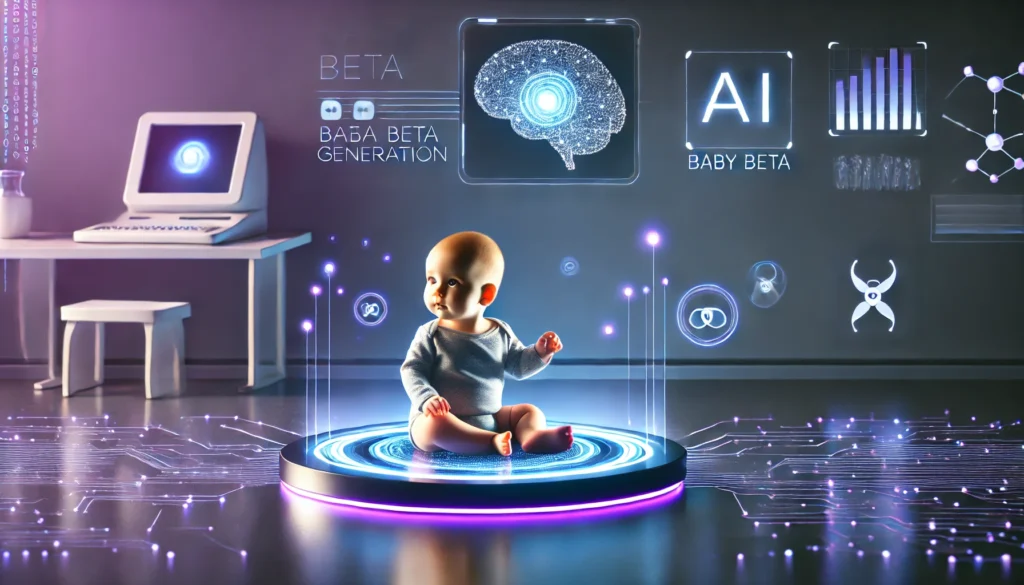
That brings us to Generation Beta (born 2025-2039) and what they are likely to become. They will be the first fully AI-enabled generation, growing up in tandem with and at the pace of advancing technologies. Their worldview and experiences may be fundamentally different from those of their Millennial and Gen Z predecessors—perhaps as distinct as the digital transformation Millennials underwent compared to the analog world of their Baby Boomer parents. Each generation’s values are shaped not only by technological advancements but also by their unique social, political, economic, and cultural exposures.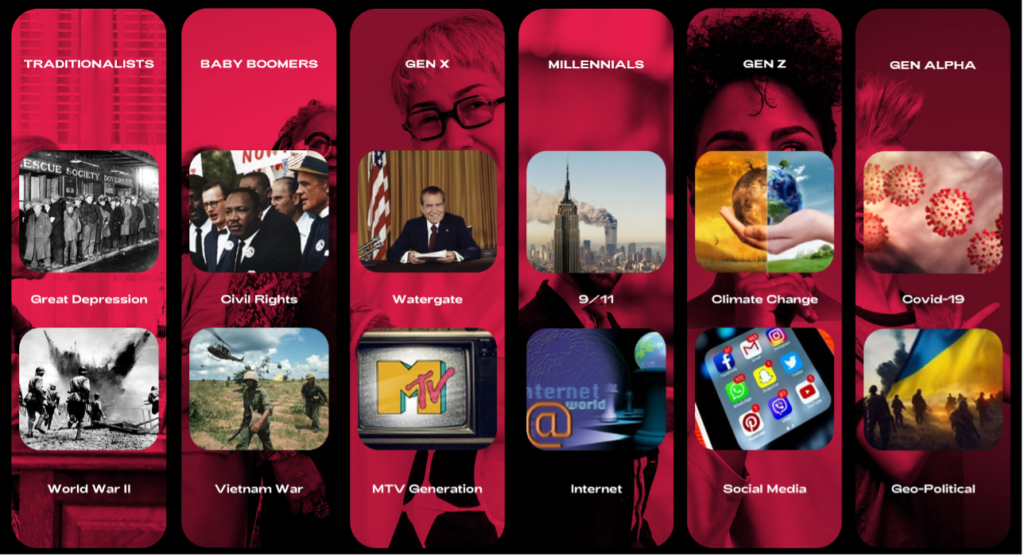 The Great Depression and World War II profoundly shaped the values of Traditionalists, while the Civil Rights Movement and the Vietnam War left an indelible mark on Baby Boomers. For Generation X, the MTV culture and the Watergate scandal were defining moments, while Millennials were shaped by the birth of the Internet and the realities of growing up in a post-9/11 world.
For Gen Z, climate change and the pervasive influence of social media have strongly shaped their outlook and expectations. Meanwhile, Gen Alpha’s formative years were marked by a global health pandemic and significant geo-political unrest.
So, what lies ahead for Generation Beta? How does your business prepare to respond, as Gen Alpha and Gen Z increasingly mature into the dominant consumer forces of the world?
One thing is certain: the pace of change is about to accelerate like never before.
The Great Depression and World War II profoundly shaped the values of Traditionalists, while the Civil Rights Movement and the Vietnam War left an indelible mark on Baby Boomers. For Generation X, the MTV culture and the Watergate scandal were defining moments, while Millennials were shaped by the birth of the Internet and the realities of growing up in a post-9/11 world.
For Gen Z, climate change and the pervasive influence of social media have strongly shaped their outlook and expectations. Meanwhile, Gen Alpha’s formative years were marked by a global health pandemic and significant geo-political unrest.
So, what lies ahead for Generation Beta? How does your business prepare to respond, as Gen Alpha and Gen Z increasingly mature into the dominant consumer forces of the world?
One thing is certain: the pace of change is about to accelerate like never before.

From Transistors to Quantum Computing: The Technology Behind Consumer Evolution
To grasp just how fast things are progressing, let’s look back to the Traditionalist generation and the historical development of the transistor—an electrical component that amplifies or switches electronic signals and power. The theoretical groundwork for semiconductors was laid as early as the 1870s using crystals. However, it wasn’t until the 1940s, during World War II, that advancements in radar and communications spurred further research. By the 1950s, silicon had become the dominant material, and the invention of the integrated circuit revolutionized electronics by allowing multiple transistors to be mounted on a single microchip. This innovation was pivotal for modern computing. A transistor functions as the on/off switch for electrical signals, forming the foundation of binary processing—the 0s and 1s that drive digital logic. The more transistors that could be packed onto a chip, the greater the processing power and speed it could achieve. Today, nanotechnology enables us to fit staggering numbers of transistors into microscopic spaces, vastly increasing the power and capabilities of modern microchips.
Moore’s Law: Driving Exponential Growth in Computing Power
In 1965, Intel co-founder Gordon Moore famously predicted what became known as Moore’s Law—the idea that the number of transistors on a microchip would approximately double every two years. Remarkably, his prediction has held true, driving exponential growth in processing power and technological innovation. In the 1970s, an average Intel chip contained just 6,000 transistors, while the chip that powered the Apollo 11 moon landing managed 16,000 transistors.
By 1985, that number had surged into the hundreds of thousands—275,000, to be exact. The 1990s brought a leap into the millions, followed by hundreds of millions by 2008. Then, in the last decade, we shattered the billion-transistor threshold, with Intel’s Core i9 in 2022 boasting a staggering 21 billion transistors.
At the time, this level of progress seemed almost unfathomable in its speed and sophistication.
In the 1970s, an average Intel chip contained just 6,000 transistors, while the chip that powered the Apollo 11 moon landing managed 16,000 transistors.
By 1985, that number had surged into the hundreds of thousands—275,000, to be exact. The 1990s brought a leap into the millions, followed by hundreds of millions by 2008. Then, in the last decade, we shattered the billion-transistor threshold, with Intel’s Core i9 in 2022 boasting a staggering 21 billion transistors.
At the time, this level of progress seemed almost unfathomable in its speed and sophistication.
 Just last week at CES, Jensen Huang, CEO of Nvidia, unveiled Project Digits, the world’s smallest personal AI supercomputer, retailing at $3,000. Packed with their new GB10 chip featuring a staggering 208 billion transistors, this supercomputer can run a 200 billion parameter model—or you can network two together to tackle a 400+ billion parameter model.
When we compare the processing power of today’s microchips with those from just 30 years ago (1995), it’s like asking a child to run alongside a SpaceX rocket and keep pace. No matter how fast you think our digital society and AI development is moving in 2024, Generation Beta is strapping in for a ride that will make today’s advances look slow in comparison.
And this is all before we even begin to explore the possibilities of Quantum Computing.
Just last week at CES, Jensen Huang, CEO of Nvidia, unveiled Project Digits, the world’s smallest personal AI supercomputer, retailing at $3,000. Packed with their new GB10 chip featuring a staggering 208 billion transistors, this supercomputer can run a 200 billion parameter model—or you can network two together to tackle a 400+ billion parameter model.
When we compare the processing power of today’s microchips with those from just 30 years ago (1995), it’s like asking a child to run alongside a SpaceX rocket and keep pace. No matter how fast you think our digital society and AI development is moving in 2024, Generation Beta is strapping in for a ride that will make today’s advances look slow in comparison.
And this is all before we even begin to explore the possibilities of Quantum Computing.
 The essence of quantum physics is that, on the subatomic level, particles of matter or energy can change states when measured. (In 2023, I wrote an entire article exploring the metaphorical impact of quantum physics on consumer research).
At its core, quantum physics challenges our perception of reality, suggesting that matter can exist in multiple states simultaneously. It’s essentially the Schrödinger’s Cat of physics—matter can be two things at once.
In terms of computing, quantum has profound implications for both processing speed and capability, opening up a new frontier of possibilities.
The essence of quantum physics is that, on the subatomic level, particles of matter or energy can change states when measured. (In 2023, I wrote an entire article exploring the metaphorical impact of quantum physics on consumer research).
At its core, quantum physics challenges our perception of reality, suggesting that matter can exist in multiple states simultaneously. It’s essentially the Schrödinger’s Cat of physics—matter can be two things at once.
In terms of computing, quantum has profound implications for both processing speed and capability, opening up a new frontier of possibilities.

Quantum Computing: Unlocking New Frontiers
Traditional computers, using the aforementioned transistors and chips, process bits, which are coded as either a ‘1’ or a ‘0’. An 8-bit chip processes data in 8-bit units, while a faster chip processes in 64-bit units. In simple terms, today’s chips can handle data more quickly and at a larger scale, with those 208 billion transistors at work. However, they still process the 1s and 0s as individual bit-units. Quantum computers, on the other hand, process qubits, which can represent both a ‘1’ and a ‘0’ simultaneously. A qubit can exist in both states at once, only collapsing into one or the other when measured or processed. Now, stay with me… What this essentially means is that quantum computers can perform many calculations simultaneously. While traditional computers process 1s and 0s sequentially, quantum computers shortcut this by processing the qubit in the state that best fits the computation. Quantum entanglement further enhances processing power, but I won’t dive too deep into that rabbit hole (if you’re genuinely curious, it’s worth looking up—it’s fascinating).
To put it simply, a quantum computer has processing capabilities far beyond what traditional computers can achieve today. And this isn’t just theoretical or science fiction; just like the Optimus humanoid robots in development, the future is already here.
Companies like IBM, Intel, and Google are all actively developing quantum computing technologies. In fact, Google recently unveiled the results of their latest quantum experimental chip, Willow.
What this essentially means is that quantum computers can perform many calculations simultaneously. While traditional computers process 1s and 0s sequentially, quantum computers shortcut this by processing the qubit in the state that best fits the computation. Quantum entanglement further enhances processing power, but I won’t dive too deep into that rabbit hole (if you’re genuinely curious, it’s worth looking up—it’s fascinating).
To put it simply, a quantum computer has processing capabilities far beyond what traditional computers can achieve today. And this isn’t just theoretical or science fiction; just like the Optimus humanoid robots in development, the future is already here.
Companies like IBM, Intel, and Google are all actively developing quantum computing technologies. In fact, Google recently unveiled the results of their latest quantum experimental chip, Willow.
 In recent testing, Google’s quantum chip performed a computation in just 5 minutes that would take one of today’s fastest supercomputers 10 septillion years (that’s 10^25—thousands of billions of years, a number that far exceeds the age of our known universe).
So, what does all this talk of 208 billion transistors and quantum computing mean for Beta babies, you might ask?
It means that the world is about to experience a technological step-change—and that will ripple out socially and culturally as well. The AI outputs we see today—deepfake videos, avatars, metaverse environments, and ChatGPT capabilities—are just the beginning. We’re currently on the uphill trundle of the rollercoaster. The accelerated drop is coming.
In recent testing, Google’s quantum chip performed a computation in just 5 minutes that would take one of today’s fastest supercomputers 10 septillion years (that’s 10^25—thousands of billions of years, a number that far exceeds the age of our known universe).
So, what does all this talk of 208 billion transistors and quantum computing mean for Beta babies, you might ask?
It means that the world is about to experience a technological step-change—and that will ripple out socially and culturally as well. The AI outputs we see today—deepfake videos, avatars, metaverse environments, and ChatGPT capabilities—are just the beginning. We’re currently on the uphill trundle of the rollercoaster. The accelerated drop is coming.
 As consumers, this means we are teetering on the edge of something new—and generally uncertain. This additional computing power will unlock vast opportunities, removing bottlenecks and limitations that once held back progress.
How Generation Beta Will Shape the Future of Consumers
Imagine a world where chemotherapy drugs are designed and targeted to work on an individual level, thanks to tumours being protein sequenced at a cell-by-cell level—something that would have taken decades in the past. Envision a world where autonomous vehicles and humanoid robotics are capable of advanced scenario planning, self-learning, and processing billions of permutations at any given moment. Imagine a world where replacement human organs are lab-grown rather than donated. A world where agriculture moves out of the fields and into the lab, where meat proteins are formulated without the need to harvest from live animals. Perhaps even a world where alternative energy sources are more accessible, and space exploration and colonization become reality.
The truth is, no one truly knows what this rollercoaster ride ahead holds. We can’t predict today the defining social, environmental, and political influences that will shape the next 15 years for maturing Gen Beta.
But one thing we can rely on is Moore’s Law.
In terms of technology, we can expect it to continue doubling in processing power. However, Mr. Moore didn’t foresee the advent of quantum computing.
No one can accurately predict what the world of work will look like for Beta babies. But one thing is certain: the world they grow up in will be faster, with more technological progress and step-changes than ever before.
Imagine a world where replacement human organs are lab-grown rather than donated. A world where agriculture moves out of the fields and into the lab, where meat proteins are formulated without the need to harvest from live animals. Perhaps even a world where alternative energy sources are more accessible, and space exploration and colonization become reality.
The truth is, no one truly knows what this rollercoaster ride ahead holds. We can’t predict today the defining social, environmental, and political influences that will shape the next 15 years for maturing Gen Beta.
But one thing we can rely on is Moore’s Law.
In terms of technology, we can expect it to continue doubling in processing power. However, Mr. Moore didn’t foresee the advent of quantum computing.
No one can accurately predict what the world of work will look like for Beta babies. But one thing is certain: the world they grow up in will be faster, with more technological progress and step-changes than ever before.
 This wave of change will challenge and redefine all established norms—from retail and communication channels to how and where we live our lives. And with every change comes opportunity for the brands and businesses that are ready to seize it.
The Beta babies may not yet be able to articulate what they need, but their Gen Z and Gen Alpha elders certainly can. These generations will mature in an AI-powered future, and as consumers, they will expect hyper-personalized, seamless, automated, predictive, and delightful customer experiences at every touchpoint.
While you may not have access to, or the expertise to leverage, a $3,000 AI supercomputer with 208 billion transistors today, the key takeaway from this article is clear: seek out AI solutions for your business.
This wave of change will challenge and redefine all established norms—from retail and communication channels to how and where we live our lives. And with every change comes opportunity for the brands and businesses that are ready to seize it.
The Beta babies may not yet be able to articulate what they need, but their Gen Z and Gen Alpha elders certainly can. These generations will mature in an AI-powered future, and as consumers, they will expect hyper-personalized, seamless, automated, predictive, and delightful customer experiences at every touchpoint.
While you may not have access to, or the expertise to leverage, a $3,000 AI supercomputer with 208 billion transistors today, the key takeaway from this article is clear: seek out AI solutions for your business.
 AI is here, and it’s poised to revolutionize the customer experience. Many businesses are still only dabbling with it, poking around the edges like a dead jellyfish washed up on the shore.
The reality is, you cannot ignore how AI will reshape both your business and customer expectations. Trying to ignore this shift is akin to ignoring the rise of the Internet in the ’90s, mobile tech in the ’00s, or social media in the previous decade.
You may not be a Beta baby yourself, but it’s time to start thinking—and acting—like one.
AI is here, and it’s poised to revolutionize the customer experience. Many businesses are still only dabbling with it, poking around the edges like a dead jellyfish washed up on the shore.
The reality is, you cannot ignore how AI will reshape both your business and customer expectations. Trying to ignore this shift is akin to ignoring the rise of the Internet in the ’90s, mobile tech in the ’00s, or social media in the previous decade.
You may not be a Beta baby yourself, but it’s time to start thinking—and acting—like one.