

We have all seen it. The one-year-old in the stroller, the parents iPhone in their grasp, scrolling away, a generation I have named the stroller scrollers. On the subway, in the playground, at the restaurant table, the digital pacifier always in hand.
Paediatricians across the globe agree on appropriate screen time for children, calculated based on risks related to their healthy social and brain development. Under two years old, the advice is no screen time at all, apart from video calling family or friends. Aged 2-5, the recommendation is 1 hour a day, co-viewed with a parent, and that 1-hour includes TV.

For anyone who has had children, those recommendations sound ridiculous. The 2-3 hours of Saturday morning cartoons I watched in the 1980s was probably the only alone time my parents had in the week (hmmm no wonder they always closed their bedroom door on a Saturday :). TVs and screens have always been a core part of a parents temporary baby-sitting arsenal.
But now we seem to have gone too far.
The iPad Kids
Generation Z (born 1995-2010) were the iPad kids, children often pacified with tablets, and not the pharmaceutical kind. It became a norm. The child is unsettled, hand it Dora or Thomas the Tank Engine on a loop. Thank God for YouTube.
But the iPad didn’t always travel everywhere. In the car and on planes, yes. Occasionally children were kept quiet at a restaurant table, immersed in the latest Disney production. But it was mostly YouTube and cartoons, the digital equivalent of my analog 1980 Saturday mornings.

But a parent’s phone is always with them, and children very quickly learn that.
Last week, on a tram, I watched an 18-month-old child in a stroller scream in tantrum until his mother handed over her phone. Ten minutes later, when she was exiting the tram and tried to take it from him, another tantrum ensued, the behavioural addiction already hard-wired.
Here Comes Trouble
We can see the problem as individuals, as parents, as medics, as educators and as a society. The studies are already published. You already know all this. Digital immersion and device over-use is causing behavioural addiction, physical injury, having a negative impact on attention spans, creativity, problem-solving, as well as being directly responsible for a surge in teenage anxiety, loneliness and depression. But we allow it all.

For all its benefits, handing a smartphone to a 1-year-old is like helping them light their first cigarette. You are handing them a device that has an interface intended to be intuitive, rewarding, and every app has an algorithm feeding the user content designed to be addictive.
Protect Our Children
Silicon Valley executives know how addictive these devices are, they design them after all. It is why they send their own children to the Waldorf School of Peninsula in San Francisco, a tech free education facility that does not allow phones, iPads, or computers of any sort in the building.
There is an Irish Bill (Education – Smartphones in Primary Schools) that was recently put forward as prospective legislation, banning smartphones in any Irish primary school.
But where is the harm in briefly quieting an agitated child with a smartphone in a stroller you ask? Well, it turns out it is significant. The Stroller Scrollers are being set up for hard times.

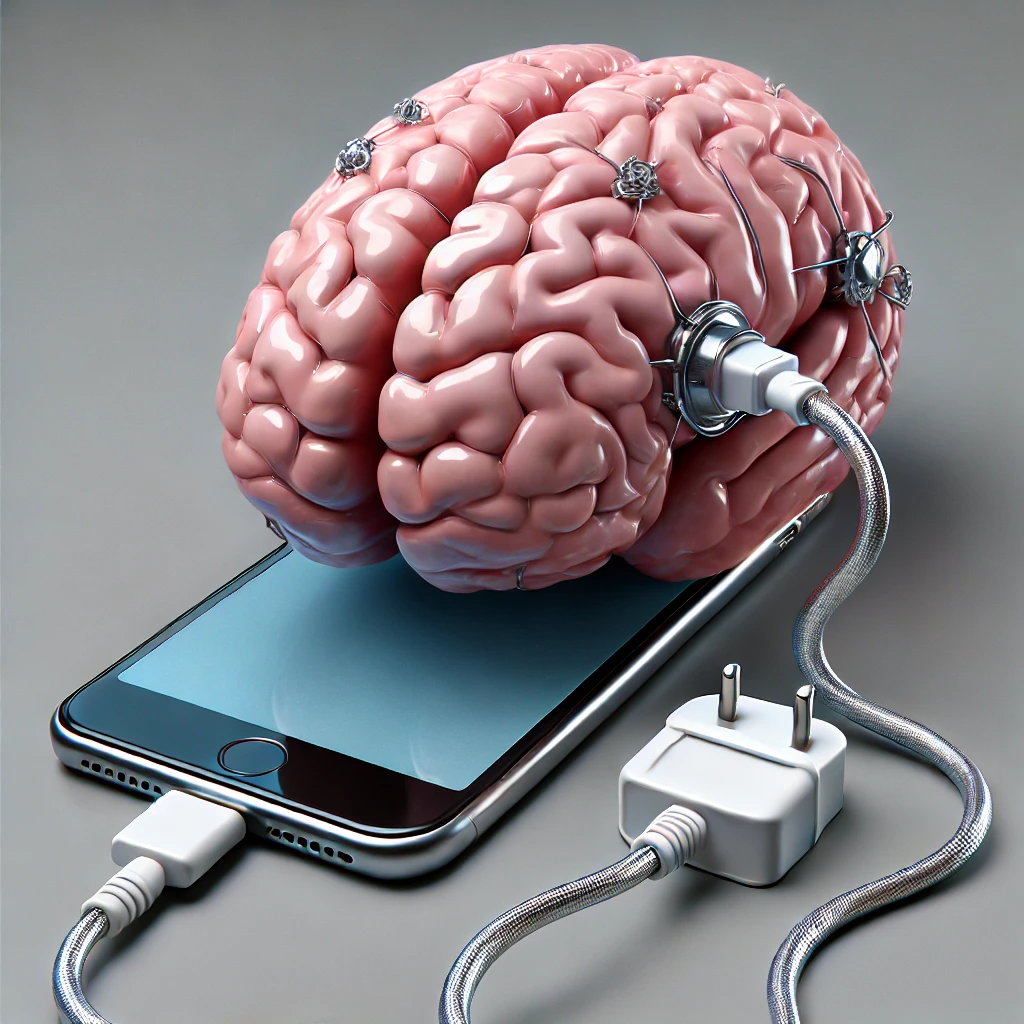
From a neurological perspective, the human brain is in a state of development until our mid-20s. The pre-frontal cortex is one of the last areas to be fully developed and is the seat of our emotional regulation, attention focus, decision-making, self-control and consequence. It is why toddlers have tantrums and teenagers take unmitigated risks.
Fading Attention Spans
The negative impact of smartphones on pre-frontal cortex development have already been proven through rigorous scientific studies, specifically around the lowering of attention span and focus and the lowering of cognitive control. But you don’t need to wade through the academic literature – talk to any educator who has over 15-20 years classroom experience and they will tell you firsthand. Attention is not what it used to be, nor is problem-solving.
Also, as children’s pre-frontal cortex is underdeveloped, they do not possess fully rounded self-regulation skills, meaning they find it inherently difficult to disengage. In our previous analog world, you drifted away from the TV when the cartoons were over. These natural breaks are called “stopping rules” and they help us to regulate pleasure as humans.

The body even has physical ‘stopping rules.’ Eat too much and you will feel full. Keep eating regardless and the body may eject the surplus. The same with alcohol. Drink too much and the body has a spectacularly dramatic way of getting rid of the invading toxin.
But we now live in a world where there are no stopping rules. Bored in the car? Here, watch YouTube. Bored at the dinner table? Here, scroll on Instagram. Bored at the playground? Here watch some Disney+. Entertainment is everywhere, digital immersion an addiction, each episode followed by another. There is no end, always another swipe or scroll. We have all wasted time mindlessly scrolling on IG or TikTok, to lift our heads and realise 2 hours have passed.

Which brings us to the Dopamine Pleasure Pathway, the reward centre of the brain. Imagine giving a child a line of cocaine, nicotine or alcohol. Now imagine giving it to them regularly, every day, for years. You do not need to be a psychologist or addiction therapist to predict the resulting likely addiction.
High Dopamine Activities (HDAs) become problematic when they are a continuous presence in our lives. There is nothing wrong with sharing a bottle of wine on an occasional Saturday, but if you are drinking one every day, for months and months, you may have an issue. The same with gambling, sex, drugs, food. Anything that gives you pleasure at a HDA level is fun, but healthiest in moderation.

Now imagine you do not even have a fully developed brain, and your dopamine levels are being raised instantly and continuously through the smartphone in your hand. The physiology of your brain develops around this dopamine flow, causing irreparable damage, behaviourally addicted to the dopamine drip of one more episode, one more scroll, one more reel.
Give me Pleasure!
These children will require high levels of dopamine in adulthood to attain the levels of pleasure to which their brains have been hard-wired, and thus may likely turn to alcohol, drugs and gambling at much higher rates than previous generations. The dopamine will have to come from somewhere.
Dr. Clifford Sussman, a child and adolescent psychiatrist and psychotherapist, has already published an academic review in the Journal of Child and Adolescent Psychiatric Clinics of North America clearly stating that “… studies strongly support the theory that IVGA (Internet and Video Game Addiction) causes long-term changes in the brain, similar to those of substance abuse”. And that was just for video games. We know reel scrolling is even more addictive.
Let’s Do Nothing
So, we know it is dangerous for our children, it sets them up for addiction, dulls their problem-solving and attention spans, makes them more irritable, and has serious effects on their ability to self-regulate. Add in the depression and anxiety caused by social media, particularly for teenage girls, and we are left to wonder why we are collectively asleep at the wheel on this, as individuals, as parents and as a society?

Generation Alpha (2010-2024) have grown up as the Stroller Scrollers. Generation Beta are about to be born (2025-2040) into a robotics, AI, metaverse fuelled world, the line between reality and that deeper digital immersion fading in significance.
The Alpha Beta Uncertainty
Gen Z have recently begun to enter the workplace, and early studies have already shown us that they are most likely to feel ambivalent about their workplace, have a work ethic considerably lower than previous generations, regularly feel disconnected from co-workers and are always ready to leave their jobs. Imagine what Gen Alpha and Beta will be like.
None of this is new news to you. The sad thing is you already know it. You have witnessed it in your own families, on the subways, in the restaurants. You are addicted yourself, so you feel too hypocritical to comment.

But we have regulations to protect the vulnerable. We do not sell alcohol, cigarettes or lottery tickets to those aged under 18 for a reason. The regulation is in place to protect them from the potential harm. The cigarette and alcohol companies are required to place warnings on their packs and bottles.
And yes, the smartphones all come now with digital controls and wellbeing apps that can minimise use time, but most are overrode, if ever set up at all. Smartphones are the smoking of our time.
The links between smoking and lung cancer first surfaced in the 1920s but it was not until the 1960s that the US Surgeon General widely reported the negative health effects publicly. The cigarette companies had buried the reports for years. The Minnesota Tobacco Document Depository (pictured below) holds 27 years of legal cases against Big Tobacco.

The tobacco companies had known smoking was causing cancer, that nicotine was highly addictive, and that filtered or light cigarettes were not safer. Yet in this capitalist world we live in, this information was buried, discredited or simply ignored.
Sound familiar? Because it should.
We know our digital devices are harming our children, yet we still offer them over. We know smartphones and social media are driving an anxiety pandemic amongst teenagers, yet we simply shrug our shoulders and say ‘teens will be teens’. We watch as our children play outdoors less, get less creative, fade away into a digital delirium. No one seems to care.
Business doesn’t care. Clicks are good, scrolling is good, your attention is good. The earlier we can make you a consumer the better.

I was aged 12 when I bought my first cassette as a Gen X consumer. My Millennial counterparts bought a CD aged 11. Generation Z kids spent their pocket money on PS4 credits aged 10 and Gen Alpha were only aged 8 when they bought a Fortnite skin (a virtual product, bought with virtual currency, in a virtual environment). The age of consumerism (demand – the moment you exert influence over what is bought for you) drops every consumer generation.
So where is it all heading? As AI diffuses throughout our everyday, the digital reality will deepen. As AR and VR interfaces become smaller, as robotics and bionics improve and quantum computing comes of age, the future is our previous science fiction come to be.
The field of cyber behaviouralism concerns itself with how our digital experiences influence our real-world interactions. For example, how the one-click, one-swipe world of instant we now live digitally negatively impacts our ability to queue or wait for anything in the real world. The Tinderisation of Society, the fact we all expect easy, disposability, everything and everyone replaceable with one swipe.

From a cyber behaviouralism perspective, the deeper digital society to which we are headed may not be good news. The 2008 dystopian reality, portrayed above in Pixar’s WALL-E, may very well come about, overweight humans floating around in spacecraft, seated in hover chairs, digitally connected but with fading memories of the creative planet of wonder they once roamed.
I work with many of the biggest technology brands in the world. I am witness to some of the most exciting AI developments that will become common place for consumers in the next few years. And I am worried. I am worried for society, for creativity, for the mental health of our children. I am worried that we are all standing back as the damage is being done.
We all laughed at this reel viral below last year, but that lazy reality is now around the corner.
I would usually end with something actionable for brands and businesses. 5 ways to leverage Stroller Scroller behaviours for your brand. But to do so here simply makes me part of the problem. We need to allow our children to be children; to help them disconnect from the deeper digital dystopia we seem to be intent on building. To not encourage them in to the consumer capitalist society we have built until later, to nourish their creativity and problem-solving in the physical, real-world.
I am aware I sound like a man who only played with a bicycle wheel and stick as a child (I did not) but we need to have louder conversations around what smartphones are doing to our children.

I will leave you with this. When my now 18-year-old son was 14, he was caught stealing whisky from my drink cabinet, to share with his teen friends down by the river. Completely normal teenage exploratory behaviour, but punishment came in the form of his smartphone confiscation for 4 weeks. He was given a ‘Nokia Blockia’ to stay in touch with parents and friends.
2 weeks into said punishment, it backfired hilariously as my son discovered the joys of disconnection (albeit forced). He was less stressed, played more guitar, skated more, and four years on, still talks about the joyous 4-weeks he spent without a smartphone. A Gen Z kid already tired of the digital demands placed on him by an always connected, always on, society.
He has also rediscovered the joys of whiskey, but as a young adult aged 18, his only punishment is now the resulting hangover.