
There is something horrifically wrong with most businesses understanding of customer loyalty. Loyalty is an emotion long before it becomes a behaviour.
Most ‘loyalty’ programmes are transactional in nature, rewarding spend rather than building relationship. You know they type, all broad variants of “Buy nine cups of coffee and get your 10th free”.
That is not loyalty; that is entrapment. In dating terms, it is akin to the ‘Does this hanky smell like chloroform to you?’ moment. You are looking to hold a customer, perhaps against their will.
Considering it is soon Halloween, nothing is more terrifying than realising that some people have actually lived through what most of us have only watched in movies.
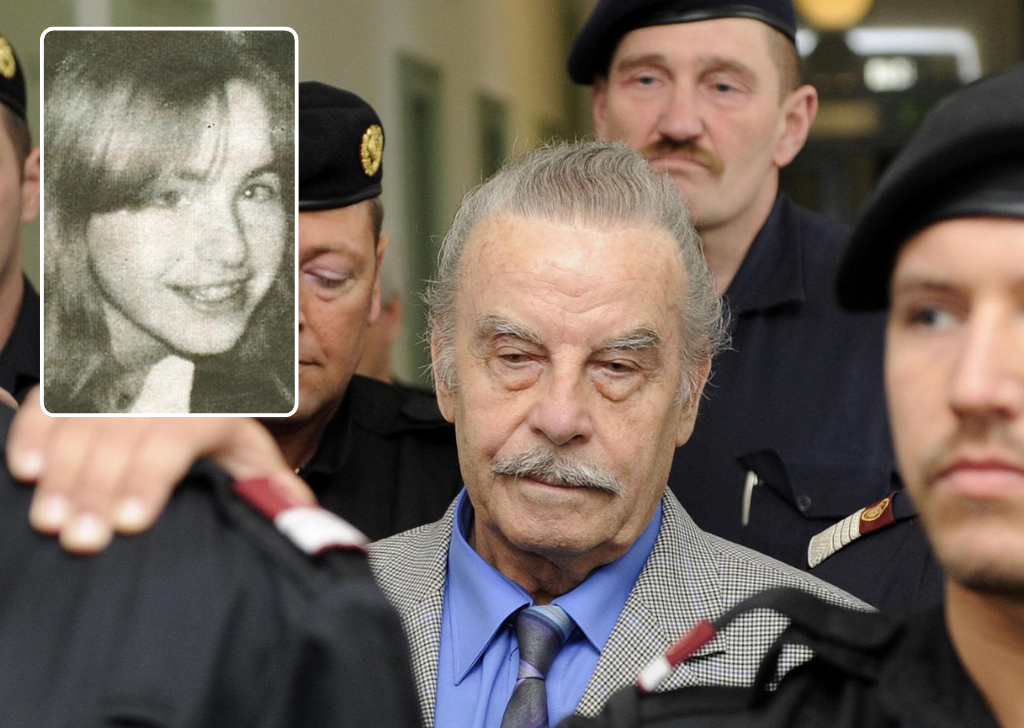 On the 26th of April 2008, Elizabeth Fritzl saw the sky for the first time in 24 years. She had been held captive by her own father, in a purpose-built cellar under the family home in Austria, where she was neglected, tortured, abused and raped over 300 times, resulting in 7 children. Only when she finally made it out, aged 42, accompanying her 19-year-old critically ill daughter to hospital, did the world learn of her 24-year terror.
Only two years previously, Austria had also heard the Natascha Kumpusch story. On March 2, 1998, 10-year-old Natascha had been kidnapped on her way to school in Vienna by Wolfgang Přiklopil.
On the 26th of April 2008, Elizabeth Fritzl saw the sky for the first time in 24 years. She had been held captive by her own father, in a purpose-built cellar under the family home in Austria, where she was neglected, tortured, abused and raped over 300 times, resulting in 7 children. Only when she finally made it out, aged 42, accompanying her 19-year-old critically ill daughter to hospital, did the world learn of her 24-year terror.
Only two years previously, Austria had also heard the Natascha Kumpusch story. On March 2, 1998, 10-year-old Natascha had been kidnapped on her way to school in Vienna by Wolfgang Přiklopil.
 She was held captive for over eight years in a small, secret cellar beneath his suburban home, and similarly subjected to systematic physical, sexual, and psychological abuse, starvation, and isolation. Initially confined to the “dungeon,” she was gradually allowed into the house, being forced to cook and clean. On August 23, 2006, then aged 18, Kampusch seized a moment when her captor, Wolfgang Přiklopil was distracted by a phone call, to flee the property.
 To understand how to build loyalty, we should first look at how it is formed between humans.
Loyalty in human relationships is rarely about logic. It isn’t a calculated decision to stay; it’s a felt connection that makes leaving unthinkable. From an evolutionary perspective, loyalty evolved as a survival mechanism as our ancestors needed trust and dependability within the tribe. Belonging to a loyal group meant safety, access to scarce resources, and emotional security. Those instincts remain hardwired in our modern social brains.
At its core, loyalty is an emotional bond that sits on three intertwined pillars: trust, consistency, and shared meaning.
To understand how to build loyalty, we should first look at how it is formed between humans.
Loyalty in human relationships is rarely about logic. It isn’t a calculated decision to stay; it’s a felt connection that makes leaving unthinkable. From an evolutionary perspective, loyalty evolved as a survival mechanism as our ancestors needed trust and dependability within the tribe. Belonging to a loyal group meant safety, access to scarce resources, and emotional security. Those instincts remain hardwired in our modern social brains.
At its core, loyalty is an emotional bond that sits on three intertwined pillars: trust, consistency, and shared meaning.
 When that trust is broken, that oxytocin loop collapses, replaced by cortisol — stress, vigilance, and withdrawal. The same dynamic explains why we find betrayal, in love or business, so emotionally jarring. Our nervous system interprets the inconsistency as danger.
In business, trust is the first gate to loyalty. Customers must believe that the brand will deliver what it promises — not just in product quality, but in honesty, ethics, and responsiveness. Amazon’s entire proposition, for example, is built on trust: you know the package will arrive when predicted, the refund will be easy and seamless, and the price will be fair. That reliability creates emotional safety, which in turn drives repeat behaviour.
Also, from a behavioural science perspective, a customer develops cognitive loyalty through consistent, high-quality experiences, making the brand a reliable and predictable choice that then reduces the cognitive load of decision-making. Put simpler, the trust helps us shortcut an otherwise arduous decision-making process when considering what brand to buy.
When that trust is broken, that oxytocin loop collapses, replaced by cortisol — stress, vigilance, and withdrawal. The same dynamic explains why we find betrayal, in love or business, so emotionally jarring. Our nervous system interprets the inconsistency as danger.
In business, trust is the first gate to loyalty. Customers must believe that the brand will deliver what it promises — not just in product quality, but in honesty, ethics, and responsiveness. Amazon’s entire proposition, for example, is built on trust: you know the package will arrive when predicted, the refund will be easy and seamless, and the price will be fair. That reliability creates emotional safety, which in turn drives repeat behaviour.
Also, from a behavioural science perspective, a customer develops cognitive loyalty through consistent, high-quality experiences, making the brand a reliable and predictable choice that then reduces the cognitive load of decision-making. Put simpler, the trust helps us shortcut an otherwise arduous decision-making process when considering what brand to buy.
 However, in our modern society, this is simply the ticket-to-play. That you have consistent excellent quality of product, efficient and responsive customer service, and demonstrate transparency and reliability. These simply earn you your continuing place at the consideration table – they do not promise to keep you there.
And trust isn’t only about performance; it’s about integrity. When Patagonia tells you not to buy what you don’t need, or when Ben & Jerry’s takes social stances aligned with their values, they reinforce a moral contract. These acts signal ‘you can trust us to stand for something beyond profit’.
However, in our modern society, this is simply the ticket-to-play. That you have consistent excellent quality of product, efficient and responsive customer service, and demonstrate transparency and reliability. These simply earn you your continuing place at the consideration table – they do not promise to keep you there.
And trust isn’t only about performance; it’s about integrity. When Patagonia tells you not to buy what you don’t need, or when Ben & Jerry’s takes social stances aligned with their values, they reinforce a moral contract. These acts signal ‘you can trust us to stand for something beyond profit’.
 Customers, like partners, also need predictable emotional outcomes. A brand that behaves erratically, with an inconsistent tone, confusing policies, or disjointed service experiences, generates uncertainty. Conversely, when every touchpoint delivers a coherent experience, the brain relaxes. Starbucks, for instance, initially engineered global consistency so that the sensory cues — the smell, the music, the logo, the name on the cup instantly created familiarity and comfort, anywhere in the world.
Consistency doesn’t mean sameness; it means reliability of emotional output. Whether online or in-store, the customer should feel the same values expressed, namely care, ease, warmth, empowerment, excitement — whatever your brand’s emotional DNA happens to be.
Customers, like partners, also need predictable emotional outcomes. A brand that behaves erratically, with an inconsistent tone, confusing policies, or disjointed service experiences, generates uncertainty. Conversely, when every touchpoint delivers a coherent experience, the brain relaxes. Starbucks, for instance, initially engineered global consistency so that the sensory cues — the smell, the music, the logo, the name on the cup instantly created familiarity and comfort, anywhere in the world.
Consistency doesn’t mean sameness; it means reliability of emotional output. Whether online or in-store, the customer should feel the same values expressed, namely care, ease, warmth, empowerment, excitement — whatever your brand’s emotional DNA happens to be.
 Emotive loyalty deepens when customers see their own identity reflected in the brand’s story. It’s the difference between I buy from them and I’m one of them.
Peloton turned exercise into tribe. Taylor Swift, the modern masterclass in tribal belonging, has elevated fandom into family. Her Swifties don’t just consume music; they participate in an emotional universe filled with codes, Easter eggs, and shared storytelling. That shared meaning is what makes them line up for new vinyl versions of albums they already own.
The same principle applies to businesses of every kind. A fashion retailer that invites customers to co-create designs, a fintech that aligns with its audience’s values on transparency, or a hotel that personalises greetings using real emotional intelligence — all are building shared narrative spaces. When customers feel part of something, they stay.
Applying that same psychology around loyalty to your brand, and the parallels should become clear.
Emotive loyalty deepens when customers see their own identity reflected in the brand’s story. It’s the difference between I buy from them and I’m one of them.
Peloton turned exercise into tribe. Taylor Swift, the modern masterclass in tribal belonging, has elevated fandom into family. Her Swifties don’t just consume music; they participate in an emotional universe filled with codes, Easter eggs, and shared storytelling. That shared meaning is what makes them line up for new vinyl versions of albums they already own.
The same principle applies to businesses of every kind. A fashion retailer that invites customers to co-create designs, a fintech that aligns with its audience’s values on transparency, or a hotel that personalises greetings using real emotional intelligence — all are building shared narrative spaces. When customers feel part of something, they stay.
Applying that same psychology around loyalty to your brand, and the parallels should become clear.
 Consumers, like humans in relationships, crave trust, consistency, and shared meaning. They seek brands that affirm their identity and reward their emotional investment. The companies that understand this transcend transactional loyalty and move into the realm of emotive loyalty, the space where the relationship becomes personal.
 So, the challenge for CX leaders should not be to ask, ‘How do we keep them buying?’ but ‘How do we make them feel?’
The brand that evokes emotion builds neurological shortcuts to loyalty: dopamine for anticipation, oxytocin for trust, serotonin for satisfaction. When you engineer emotions, you engineer return.
So, the challenge for CX leaders should not be to ask, ‘How do we keep them buying?’ but ‘How do we make them feel?’
The brand that evokes emotion builds neurological shortcuts to loyalty: dopamine for anticipation, oxytocin for trust, serotonin for satisfaction. When you engineer emotions, you engineer return.
 The psychology of emotive loyalty reminds us that retention is not about locking customers in – we are not Fritzl or Přiklopil. A customer that you have ‘kidnapped in your metaphorical basement’ has not chosen to be in relationship with you. A new customer ‘acquired’ through a 6-month special offer and then locked into a subsequent higher-priced 12-month contract is retention under duress as opposed to by choice.
Brand loyalty is earned when a customer chooses to have you as part of their life, when they invite your brand in. It is about drawing your customers close.
In a world of choice, attention, and noise, loyalty becomes less about contracts and all about connection. Brands that misunderstand loyalty are in danger of being in a toxic relationship with their customers, one that will not end well for them. Your customer will move on; they will be fine.
Brand loyalty has little to do with transactional and habitual behaviours but everything to do with understanding the psychology of connection and belonging.
Because at the end of the day, every loyal customer wants to simply say what every loyal human says: “I belong here. They get me.”
The psychology of emotive loyalty reminds us that retention is not about locking customers in – we are not Fritzl or Přiklopil. A customer that you have ‘kidnapped in your metaphorical basement’ has not chosen to be in relationship with you. A new customer ‘acquired’ through a 6-month special offer and then locked into a subsequent higher-priced 12-month contract is retention under duress as opposed to by choice.
Brand loyalty is earned when a customer chooses to have you as part of their life, when they invite your brand in. It is about drawing your customers close.
In a world of choice, attention, and noise, loyalty becomes less about contracts and all about connection. Brands that misunderstand loyalty are in danger of being in a toxic relationship with their customers, one that will not end well for them. Your customer will move on; they will be fine.
Brand loyalty has little to do with transactional and habitual behaviours but everything to do with understanding the psychology of connection and belonging.
Because at the end of the day, every loyal customer wants to simply say what every loyal human says: “I belong here. They get me.”
On the 26th of April 2008, Elizabeth Fritzl saw the sky for the first time in 24 years. She had been held captive by her own father, in a purpose-built cellar under the family home in Austria, where she was neglected, tortured, abused and raped over 300 times, resulting in 7 children. Only when she finally made it out, aged 42, accompanying her 19-year-old critically ill daughter to hospital, did the world learn of her 24-year terror.
Only two years previously, Austria had also heard the Natascha Kumpusch story. On March 2, 1998, 10-year-old Natascha had been kidnapped on her way to school in Vienna by Wolfgang Přiklopil.
She was held captive for over eight years in a small, secret cellar beneath his suburban home, and similarly subjected to systematic physical, sexual, and psychological abuse, starvation, and isolation. Initially confined to the “dungeon,” she was gradually allowed into the house, being forced to cook and clean. On August 23, 2006, then aged 18, Kampusch seized a moment when her captor, Wolfgang Přiklopil was distracted by a phone call, to flee the property.
Attract Not Retain
Society is fascinated by the horror of such cases. It is difficult to truly understand what it feels like to be held against your will for so long, not to mind the abuse these victims suffered. While I am not making actual parallels between the very real trauma of those mentioned above and customer retention, I do want to drive home the ‘entrapment’ point. Whether between two people or between a person and a brand, the roots of loyalty are psychological, not transactional. To think that you are developing ‘loyalty’ because you have somehow detained your customer through transactional entrapment is actually quite a toxic relationship.
To understand how to build loyalty, we should first look at how it is formed between humans.
Loyalty in human relationships is rarely about logic. It isn’t a calculated decision to stay; it’s a felt connection that makes leaving unthinkable. From an evolutionary perspective, loyalty evolved as a survival mechanism as our ancestors needed trust and dependability within the tribe. Belonging to a loyal group meant safety, access to scarce resources, and emotional security. Those instincts remain hardwired in our modern social brains.
At its core, loyalty is an emotional bond that sits on three intertwined pillars: trust, consistency, and shared meaning.
1.Trust. The Foundation of Attachment
Trust is the psychological glue of loyalty. It forms through repeated experiences of reliability, that is promises made and kept, signals sent and subsequently matched by actions. In relationships, trust grows slowly but can fracture instantly. The brain rewards trustworthy behaviour with oxytocin, the “bonding hormone,” which reinforces the desire to reconnect and depend on the other. This biochemical loop means loyalty literally feels good; it reduces anxiety and increases emotional safety.
When that trust is broken, that oxytocin loop collapses, replaced by cortisol — stress, vigilance, and withdrawal. The same dynamic explains why we find betrayal, in love or business, so emotionally jarring. Our nervous system interprets the inconsistency as danger.
In business, trust is the first gate to loyalty. Customers must believe that the brand will deliver what it promises — not just in product quality, but in honesty, ethics, and responsiveness. Amazon’s entire proposition, for example, is built on trust: you know the package will arrive when predicted, the refund will be easy and seamless, and the price will be fair. That reliability creates emotional safety, which in turn drives repeat behaviour.
Also, from a behavioural science perspective, a customer develops cognitive loyalty through consistent, high-quality experiences, making the brand a reliable and predictable choice that then reduces the cognitive load of decision-making. Put simpler, the trust helps us shortcut an otherwise arduous decision-making process when considering what brand to buy.
However, in our modern society, this is simply the ticket-to-play. That you have consistent excellent quality of product, efficient and responsive customer service, and demonstrate transparency and reliability. These simply earn you your continuing place at the consideration table – they do not promise to keep you there.
And trust isn’t only about performance; it’s about integrity. When Patagonia tells you not to buy what you don’t need, or when Ben & Jerry’s takes social stances aligned with their values, they reinforce a moral contract. These acts signal ‘you can trust us to stand for something beyond profit’.
2.Consistency. Predictability Breeds Safety
Loyalty also thrives on predictability. In close relationships, partners who behave consistently create a sense of safety, the ability to forecast emotional outcomes. “I know how you’ll respond to me” becomes the basis of the comfort we seek in partnership. Inconsistency, by contrast, keeps the brain on alert, triggering uncertainty and defensive behaviours. Neuroscientists call this expectation confirmation. Each positive interaction that aligns with our internal model of the other strengthens the bond. Each mismatch weakens it. Over time, the patterns then matter more than moments.
Customers, like partners, also need predictable emotional outcomes. A brand that behaves erratically, with an inconsistent tone, confusing policies, or disjointed service experiences, generates uncertainty. Conversely, when every touchpoint delivers a coherent experience, the brain relaxes. Starbucks, for instance, initially engineered global consistency so that the sensory cues — the smell, the music, the logo, the name on the cup instantly created familiarity and comfort, anywhere in the world.
Consistency doesn’t mean sameness; it means reliability of emotional output. Whether online or in-store, the customer should feel the same values expressed, namely care, ease, warmth, empowerment, excitement — whatever your brand’s emotional DNA happens to be.
3.Shared meaning. Belonging to Something Bigger
The deepest loyalty arises not from mutual benefit but from shared identity. Humans bond around story. Couples share “our song.” Families share rituals. Friends share inside jokes. Through these shared meanings, we co-author the narrative of belonging. This narrative is powerful because it connects us to purpose. We aren’t just loyal to people; we’re loyal to what those people represent in our story — safety, love, identity, belonging, continuity. Loyalty, then, is not a contract but a reflection of self: I stay because this relationship affirms who I am. So, when loyalty fades, it’s rarely because the benefits decreased; it’s because the emotional meaning has shifted. The person, or the relationship, no longer mirrors our evolving identity.
Emotive loyalty deepens when customers see their own identity reflected in the brand’s story. It’s the difference between I buy from them and I’m one of them.
Peloton turned exercise into tribe. Taylor Swift, the modern masterclass in tribal belonging, has elevated fandom into family. Her Swifties don’t just consume music; they participate in an emotional universe filled with codes, Easter eggs, and shared storytelling. That shared meaning is what makes them line up for new vinyl versions of albums they already own.
The same principle applies to businesses of every kind. A fashion retailer that invites customers to co-create designs, a fintech that aligns with its audience’s values on transparency, or a hotel that personalises greetings using real emotional intelligence — all are building shared narrative spaces. When customers feel part of something, they stay.
Applying that same psychology around loyalty to your brand, and the parallels should become clear.
Consumers, like humans in relationships, crave trust, consistency, and shared meaning. They seek brands that affirm their identity and reward their emotional investment. The companies that understand this transcend transactional loyalty and move into the realm of emotive loyalty, the space where the relationship becomes personal.
From Transactions to Transformation
Sadly, traditional loyalty programmes often focus on repeat purchase behaviour: points, discounts, incentives. But true emotive loyalty is not about repeat; it’s about relationship. It’s built when the brand helps the customer become a better version of themselves — more confident, more connected, more inspired. Nike’s “Just Do It” didn’t just sell shoes; it sold self-belief. Disney don’t sell theme park tickets; it sells the magic of childhood memory. Taylor Swift doesn’t sell pop; she sells story and belonging. These brands understand that loyalty is the by-product of transformation — when the customer leaves the experience changed, even slightly, for the better.The Science of Feeling
Modern neuroscience has long confirmed that decisions are emotional before they are rational. Antonio Damasio’s famous studies on patients with damaged emotional centres showed they could no longer make even simple choices. Without feeling, there can never be loyalty — only convenience. When you think you have loyal customers, it is far more likely that all you have is ‘customers of convenience’.
So, the challenge for CX leaders should not be to ask, ‘How do we keep them buying?’ but ‘How do we make them feel?’
The brand that evokes emotion builds neurological shortcuts to loyalty: dopamine for anticipation, oxytocin for trust, serotonin for satisfaction. When you engineer emotions, you engineer return.
Loyalty is a Love Story
Whether between two humans or between a human and a brand, loyalty thrives on emotional resonance. We stay loyal to people who make us feel safe, seen, and significant. The same is true of brands. Most brand loyalty programmes are data-capture or entrapment initiatives masquerading as loyalty schemes. It is about the brand itself, the data acquired, the tracking, the transaction, the ‘retention’ (a nicer sounding word than ‘detention’ but you are not fooling anyone) . Most loyalty programmes are not about the relationship, the connection, the community.
The psychology of emotive loyalty reminds us that retention is not about locking customers in – we are not Fritzl or Přiklopil. A customer that you have ‘kidnapped in your metaphorical basement’ has not chosen to be in relationship with you. A new customer ‘acquired’ through a 6-month special offer and then locked into a subsequent higher-priced 12-month contract is retention under duress as opposed to by choice.
Brand loyalty is earned when a customer chooses to have you as part of their life, when they invite your brand in. It is about drawing your customers close.
In a world of choice, attention, and noise, loyalty becomes less about contracts and all about connection. Brands that misunderstand loyalty are in danger of being in a toxic relationship with their customers, one that will not end well for them. Your customer will move on; they will be fine.
Brand loyalty has little to do with transactional and habitual behaviours but everything to do with understanding the psychology of connection and belonging.
Because at the end of the day, every loyal customer wants to simply say what every loyal human says: “I belong here. They get me.”