
There is nothing better than the excitement of children running down the stairs to see what St. Nick brought them on Christmas morning. Part of the magic of Christmas is all the uncertainty. Will he bring what I asked him for? Am I on the nice list? What surprises will be in my stocking?
In fact, as an adult, opening any gift mirrors that same excitement. Think of the moment before you open a gift, the moment the wrapped and ribboned box is handed to you. It is a Schrodinger’s Cat moment.
 The unopened gift is both amazing and disappointing at the same time. Is it something you really wanted or will it be making its way to your local thrift shop within days? You won’t know which until you open it. Closed it is both, but once opened, it is one or the other.
It is this uncertainty that makes it exciting, the roulette of it all. Will it land on black or red, will it make my heart sink or sing? Tearing the paper off will reveal reality.
In customer and employee experience, I often talk about ‘excite & delight’ as being key to deeper connections. It is in going beyond expectations, in the surprise, that we form bonds of emotive connection. But why?
The reflex facial response to surprise is genuinely like a cartoon. The eyebrows go up and out, the jaw relaxes and drops, and the upper eyelids rise, giving that ‘eyes wide open’ look. Verbally we tend to gasp or emit short syllable words like ‘wow’ or rendered speechless. Physiologically, heart rate and breathing increase alongside the burst of adrenaline.
The unopened gift is both amazing and disappointing at the same time. Is it something you really wanted or will it be making its way to your local thrift shop within days? You won’t know which until you open it. Closed it is both, but once opened, it is one or the other.
It is this uncertainty that makes it exciting, the roulette of it all. Will it land on black or red, will it make my heart sink or sing? Tearing the paper off will reveal reality.
In customer and employee experience, I often talk about ‘excite & delight’ as being key to deeper connections. It is in going beyond expectations, in the surprise, that we form bonds of emotive connection. But why?
The reflex facial response to surprise is genuinely like a cartoon. The eyebrows go up and out, the jaw relaxes and drops, and the upper eyelids rise, giving that ‘eyes wide open’ look. Verbally we tend to gasp or emit short syllable words like ‘wow’ or rendered speechless. Physiologically, heart rate and breathing increase alongside the burst of adrenaline.
 Surprise is, in fact, an error signal to our brain that something unexpected is happening, it is a neuro alert that tells us that something important is occurring. It draws all our cognitive resources in, ensuring that we are fully in that moment.
At a neural level, it is a dopamine trigger, firing the attention and motivation centres of our brain. This was essential for our early ancestors to survive, being able to react quickly to any dangerous change in their environment. The hormonal releases associated with surprise make us stop, notice, and learn. And we can harness this for building strong customer and employee connections.
In a pleasant surprise, say a moment of ‘excite & delight’ where a brand perhaps goes beyond expectation for a customer or employee, there are arising memory benefits. Because the dopamine release is associated with a positive feeling and uplifted mood, we ensure that the surprise is coded into memory.
These positive feelings are then attributed to the unexpected moment, and thus the brand or business responsible. This is why going beyond customer and employee expectation is so important for building strong emotive loyalty connections. Bonds of positive memory are formed and associated physiologically at the moment of surprise. It is just good science.
Surprise is, in fact, an error signal to our brain that something unexpected is happening, it is a neuro alert that tells us that something important is occurring. It draws all our cognitive resources in, ensuring that we are fully in that moment.
At a neural level, it is a dopamine trigger, firing the attention and motivation centres of our brain. This was essential for our early ancestors to survive, being able to react quickly to any dangerous change in their environment. The hormonal releases associated with surprise make us stop, notice, and learn. And we can harness this for building strong customer and employee connections.
In a pleasant surprise, say a moment of ‘excite & delight’ where a brand perhaps goes beyond expectation for a customer or employee, there are arising memory benefits. Because the dopamine release is associated with a positive feeling and uplifted mood, we ensure that the surprise is coded into memory.
These positive feelings are then attributed to the unexpected moment, and thus the brand or business responsible. This is why going beyond customer and employee expectation is so important for building strong emotive loyalty connections. Bonds of positive memory are formed and associated physiologically at the moment of surprise. It is just good science.

 To delve even deeper into the psychology of surprise, the ‘Freeze /Find /Shift’ sequence is also worth exploring. The initial reaction, even with a pleasant surprise, is a ‘freeze’. This lasts only about 1/25th of a second but represents the initial cognitive paralysis and allocation of all resources to work on arising unexpected issues.
We then immediately progress to the ‘find’ stage, an innate curiosity humans possess to determine what exactly is going on. And once determined, there is the ‘shift’. For the purposes of customer or employee lifetime value, this is the big one.
The ‘shift’ is something that may force you to change your perspective. An unexpected, pleasant surprise may have you recalibrating how you feel about someone, something, a relationship or a brand. If someone gives you a thoughtful and deeply personal gift, you may change your perception and previous judgements towards them. Add to that the fact that our emotional responses intensify up to 400% during surprise, and you unleash powerful potential for emotive bonding.
All of the science and psychology behind pleasant surprise (curiosity, grabbing people’s attention, delight, excitement and associated memory) is positive for deeper customer or employee connections.
The mistake to make is the assumption that surprise has to be significant or at the viral level. It is often little things that can have similar power. It is the team leader giving their staff a surprise Friday afternoon off, a coffee-shop barista offering a regular customer their mocha on the house, a nurse bringing a patient a magazine they know they will enjoy.
Yes, customer loyalty or employee belonging can be built on the big moments, but like most relationships, loyalty is earned over time and in the smaller moments, often in acts of kindness or service.
To delve even deeper into the psychology of surprise, the ‘Freeze /Find /Shift’ sequence is also worth exploring. The initial reaction, even with a pleasant surprise, is a ‘freeze’. This lasts only about 1/25th of a second but represents the initial cognitive paralysis and allocation of all resources to work on arising unexpected issues.
We then immediately progress to the ‘find’ stage, an innate curiosity humans possess to determine what exactly is going on. And once determined, there is the ‘shift’. For the purposes of customer or employee lifetime value, this is the big one.
The ‘shift’ is something that may force you to change your perspective. An unexpected, pleasant surprise may have you recalibrating how you feel about someone, something, a relationship or a brand. If someone gives you a thoughtful and deeply personal gift, you may change your perception and previous judgements towards them. Add to that the fact that our emotional responses intensify up to 400% during surprise, and you unleash powerful potential for emotive bonding.
All of the science and psychology behind pleasant surprise (curiosity, grabbing people’s attention, delight, excitement and associated memory) is positive for deeper customer or employee connections.
The mistake to make is the assumption that surprise has to be significant or at the viral level. It is often little things that can have similar power. It is the team leader giving their staff a surprise Friday afternoon off, a coffee-shop barista offering a regular customer their mocha on the house, a nurse bringing a patient a magazine they know they will enjoy.
Yes, customer loyalty or employee belonging can be built on the big moments, but like most relationships, loyalty is earned over time and in the smaller moments, often in acts of kindness or service.
 Understanding people need tissues when they are sick, Kleenex used a Facebook search to identify those who had recently posted about being ‘sick’ or ‘under the weather’. Having then contacted the users Facebook friends and family for address information, they hand-delivered a personalised ‘Kleenex Kit’ within hours of the original post.
But to bring the power of surprise to life, let’s use a video. This example is over 10 years old now, but it is a classic for a reason.
Looking back on all the neuroscience and psychology above, you will see first hand, the power of surprise with customers, what happens when we engage emotion and form bonds of connection.
Understanding people need tissues when they are sick, Kleenex used a Facebook search to identify those who had recently posted about being ‘sick’ or ‘under the weather’. Having then contacted the users Facebook friends and family for address information, they hand-delivered a personalised ‘Kleenex Kit’ within hours of the original post.
But to bring the power of surprise to life, let’s use a video. This example is over 10 years old now, but it is a classic for a reason.
Looking back on all the neuroscience and psychology above, you will see first hand, the power of surprise with customers, what happens when we engage emotion and form bonds of connection.

The Thrill of Surprise
 The unopened gift is both amazing and disappointing at the same time. Is it something you really wanted or will it be making its way to your local thrift shop within days? You won’t know which until you open it. Closed it is both, but once opened, it is one or the other.
It is this uncertainty that makes it exciting, the roulette of it all. Will it land on black or red, will it make my heart sink or sing? Tearing the paper off will reveal reality.
The unopened gift is both amazing and disappointing at the same time. Is it something you really wanted or will it be making its way to your local thrift shop within days? You won’t know which until you open it. Closed it is both, but once opened, it is one or the other.
It is this uncertainty that makes it exciting, the roulette of it all. Will it land on black or red, will it make my heart sink or sing? Tearing the paper off will reveal reality.
 In customer and employee experience, I often talk about ‘excite & delight’ as being key to deeper connections. It is in going beyond expectations, in the surprise, that we form bonds of emotive connection. But why?
The Universality of Surprise
Surprise is one of the seven universal emotions (the other six being happiness, sadness, fright, disgust, contempt and anger). Of course, surprise can be both pleasant or unpleasant and is one of the shortest lasting of the universal emotions, quickly giving way to either amusement, happiness and joy or fright, anger or sadness. The reflex facial response to surprise is genuinely like a cartoon. The eyebrows go up and out, the jaw relaxes and drops, and the upper eyelids rise, giving that ‘eyes wide open’ look. Verbally we tend to gasp or emit short syllable words like ‘wow’ or rendered speechless. Physiologically, heart rate and breathing increase alongside the burst of adrenaline.
How Surprise Engages the Brain
 Surprise is, in fact, an error signal to our brain that something unexpected is happening, it is a neuro alert that tells us that something important is occurring. It draws all our cognitive resources in, ensuring that we are fully in that moment.
At a neural level, it is a dopamine trigger, firing the attention and motivation centres of our brain. This was essential for our early ancestors to survive, being able to react quickly to any dangerous change in their environment. The hormonal releases associated with surprise make us stop, notice, and learn. And we can harness this for building strong customer and employee connections.
Surprise is, in fact, an error signal to our brain that something unexpected is happening, it is a neuro alert that tells us that something important is occurring. It draws all our cognitive resources in, ensuring that we are fully in that moment.
At a neural level, it is a dopamine trigger, firing the attention and motivation centres of our brain. This was essential for our early ancestors to survive, being able to react quickly to any dangerous change in their environment. The hormonal releases associated with surprise make us stop, notice, and learn. And we can harness this for building strong customer and employee connections.
Memory Benefits of Pleasant Surprise
 In a pleasant surprise, say a moment of ‘excite & delight’ where a brand perhaps goes beyond expectation for a customer or employee, there are arising memory benefits. Because the dopamine release is associated with a positive feeling and uplifted mood, we ensure that the surprise is coded into memory.
These positive feelings are then attributed to the unexpected moment, and thus the brand or business responsible. This is why going beyond customer and employee expectation is so important for building strong emotive loyalty connections. Bonds of positive memory are formed and associated physiologically at the moment of surprise. It is just good science.
In a pleasant surprise, say a moment of ‘excite & delight’ where a brand perhaps goes beyond expectation for a customer or employee, there are arising memory benefits. Because the dopamine release is associated with a positive feeling and uplifted mood, we ensure that the surprise is coded into memory.
These positive feelings are then attributed to the unexpected moment, and thus the brand or business responsible. This is why going beyond customer and employee expectation is so important for building strong emotive loyalty connections. Bonds of positive memory are formed and associated physiologically at the moment of surprise. It is just good science.

The Downside of the Unpleasant Surprise
The opposite is also true of course. The moment a brand or business unexpectedly fails a customer, we have a similar hormonal reaction and associated memory coding, but this time as a negative. The strength of this reaction can often undo many years of smaller customer connection and brand building. Hormones and instinctive neural stimuli are potent bedfellows. To delve even deeper into the psychology of surprise, the ‘Freeze /Find /Shift’ sequence is also worth exploring. The initial reaction, even with a pleasant surprise, is a ‘freeze’. This lasts only about 1/25th of a second but represents the initial cognitive paralysis and allocation of all resources to work on arising unexpected issues.
We then immediately progress to the ‘find’ stage, an innate curiosity humans possess to determine what exactly is going on. And once determined, there is the ‘shift’. For the purposes of customer or employee lifetime value, this is the big one.
To delve even deeper into the psychology of surprise, the ‘Freeze /Find /Shift’ sequence is also worth exploring. The initial reaction, even with a pleasant surprise, is a ‘freeze’. This lasts only about 1/25th of a second but represents the initial cognitive paralysis and allocation of all resources to work on arising unexpected issues.
We then immediately progress to the ‘find’ stage, an innate curiosity humans possess to determine what exactly is going on. And once determined, there is the ‘shift’. For the purposes of customer or employee lifetime value, this is the big one.
Recalibrate the Relationship
 The ‘shift’ is something that may force you to change your perspective. An unexpected, pleasant surprise may have you recalibrating how you feel about someone, something, a relationship or a brand. If someone gives you a thoughtful and deeply personal gift, you may change your perception and previous judgements towards them. Add to that the fact that our emotional responses intensify up to 400% during surprise, and you unleash powerful potential for emotive bonding.
All of the science and psychology behind pleasant surprise (curiosity, grabbing people’s attention, delight, excitement and associated memory) is positive for deeper customer or employee connections.
The ‘shift’ is something that may force you to change your perspective. An unexpected, pleasant surprise may have you recalibrating how you feel about someone, something, a relationship or a brand. If someone gives you a thoughtful and deeply personal gift, you may change your perception and previous judgements towards them. Add to that the fact that our emotional responses intensify up to 400% during surprise, and you unleash powerful potential for emotive bonding.
All of the science and psychology behind pleasant surprise (curiosity, grabbing people’s attention, delight, excitement and associated memory) is positive for deeper customer or employee connections.
 The mistake to make is the assumption that surprise has to be significant or at the viral level. It is often little things that can have similar power. It is the team leader giving their staff a surprise Friday afternoon off, a coffee-shop barista offering a regular customer their mocha on the house, a nurse bringing a patient a magazine they know they will enjoy.
Yes, customer loyalty or employee belonging can be built on the big moments, but like most relationships, loyalty is earned over time and in the smaller moments, often in acts of kindness or service.
The mistake to make is the assumption that surprise has to be significant or at the viral level. It is often little things that can have similar power. It is the team leader giving their staff a surprise Friday afternoon off, a coffee-shop barista offering a regular customer their mocha on the house, a nurse bringing a patient a magazine they know they will enjoy.
Yes, customer loyalty or employee belonging can be built on the big moments, but like most relationships, loyalty is earned over time and in the smaller moments, often in acts of kindness or service.
Case Studies in Surprise
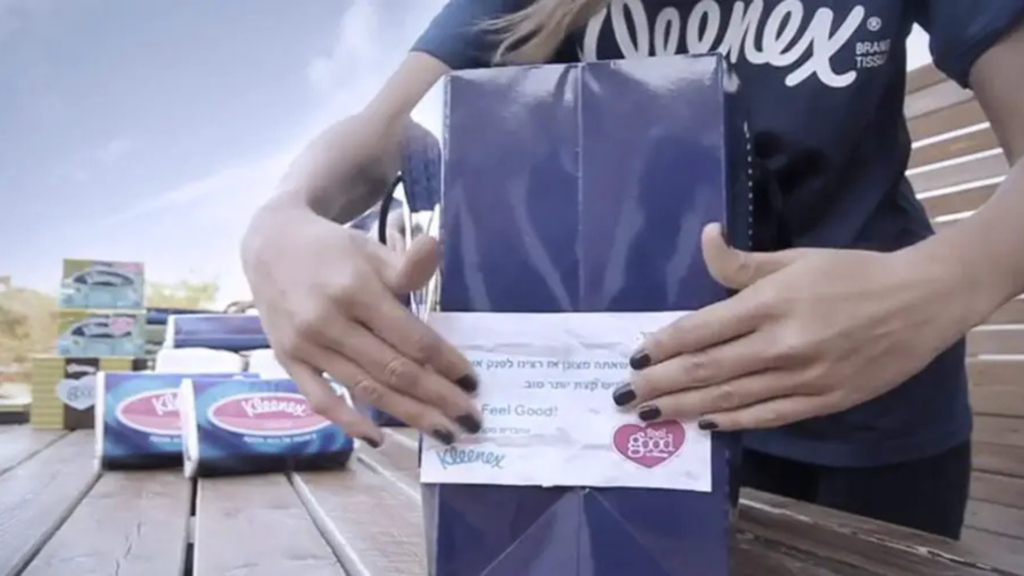 Understanding people need tissues when they are sick, Kleenex used a Facebook search to identify those who had recently posted about being ‘sick’ or ‘under the weather’. Having then contacted the users Facebook friends and family for address information, they hand-delivered a personalised ‘Kleenex Kit’ within hours of the original post.
But to bring the power of surprise to life, let’s use a video. This example is over 10 years old now, but it is a classic for a reason.
Looking back on all the neuroscience and psychology above, you will see first hand, the power of surprise with customers, what happens when we engage emotion and form bonds of connection.
Understanding people need tissues when they are sick, Kleenex used a Facebook search to identify those who had recently posted about being ‘sick’ or ‘under the weather’. Having then contacted the users Facebook friends and family for address information, they hand-delivered a personalised ‘Kleenex Kit’ within hours of the original post.
But to bring the power of surprise to life, let’s use a video. This example is over 10 years old now, but it is a classic for a reason.
Looking back on all the neuroscience and psychology above, you will see first hand, the power of surprise with customers, what happens when we engage emotion and form bonds of connection.