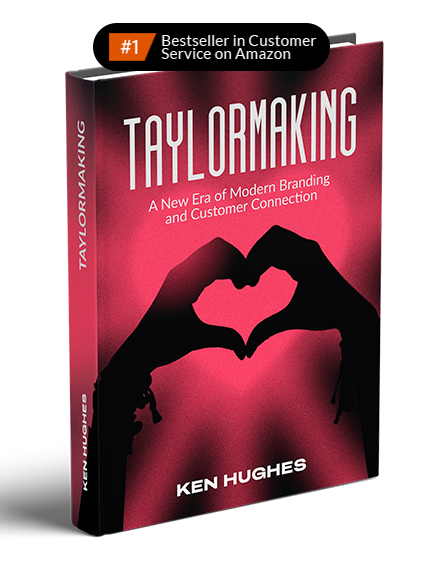


Why years of customer connection can disappear in a single moment of perceived unfairness
As Hallowe’en approaches, I find myself thinking about the ancient Celtic festival of Samhain (pronounced sow-en), the idea that at this time of year the thin veil separating the world of the living from the world of the dead becomes unusually thin.
For our Celtic pagan ancestors, Samhain marked the transition between the lighter half of the year and the darker winter months, a time when the boundaries between worlds were believed to blur and the spirits could move between them. On the 31st of October, they lit bonfires and dressed up to ward off any spirits, often visiting each other’s homes for safety. It was these Irish and Scottish emigrants who took those traditions to the US, which were later to become modern day trick or treating and the Hallowe’en we know today.

To be fair, us Irish always know how to throw a good party.
But in this thin veil metaphor, I think there is something relevant for Customer Experience. There is another thin veil separating the world of the loyal, engaged, emotionally connected customer from the rather darker world of the customer who has decided they are finished with you. And just like that crossing over spirit, ghost or ghoul, it can all be very sudden and very scary.
On one side of this veil sits Customer Lifetime Value, advocacy and loyalty, while on the other sits indifference, resentment, abandonment and the uncomfortable reality that your customer is now considering a relationship with another brand. You end up as the lonely black liquorice at the end of the trick or treat bag.
What fascinates me is just how thin that veil can be.
A customer might have been buying from your brand for twenty years, recommending you to friends, forgiving the occasional service mistake and happily ignoring your competitors, only to experience one interaction that then changes everything.

One unreasonable charge. One overly dismissive employee. One particularly unfair policy. One moment when the customer suddenly realises that the relationship they thought they had with your brand isn’t quite the relationship your brand thinks it has with them.
And just like that, something dies. The grim reaper cometh. Not necessarily the account or transaction, at least not immediately, but something far more valuable.
The death of the emotional connection.
The Psychology of Being Let Down

We tend to think about customer dissatisfaction in functional terms. The product didn’t work or the delivery was late, the refund took too long, or the service wasn’t what we expected. But that doesn’t fully explain why some of our customer negative experiences are quickly forgotten while others generate anger completely disproportionate to the original problem.
To understand that we need to look at the psychology of rejection.
As I’ve outlined in previous articles, human beings have an extraordinary sensitivity to being excluded, dismissed or treated as though they don’t matter, something that makes perfect evolutionary sense when we consider how dependent our ancestors were on belonging to a tribe. For most of human history, rejection from your social group wasn’t simply unpleasant, it threatens your success and survival. It still does.
Social neuroscientist Naomi Eisenberger’s research has explored how social exclusion engages some of the same neural systems involved in processing the distress associated with physical pain. In other words, being rejected can genuinely hurt.

When a company refuses to help us, dismisses our concerns or hides behind a policy that appears unreasonable, our response therefore isn’t always simply frustration with the practical outcome. We can experience something closer to rejection, a feeling that the organisation doesn’t value us, respect us or particularly care whether we remain a customer.
The company says, “Unfortunately, our terms and conditions don’t permit a refund” but the customer hears, “You don’t matter enough for us to help.”. This is a difference most companies do not get.
In that moment, suddenly that veil between loyalty and abandonment becomes remarkably thin. And it usually tears, the customer ‘crossing over’ and moving toward the white light of your competitor.
The Power of Fairness

There is another fascinating piece of behavioural science that helps explain why customers react so strongly when they believe they have been treated unfairly.
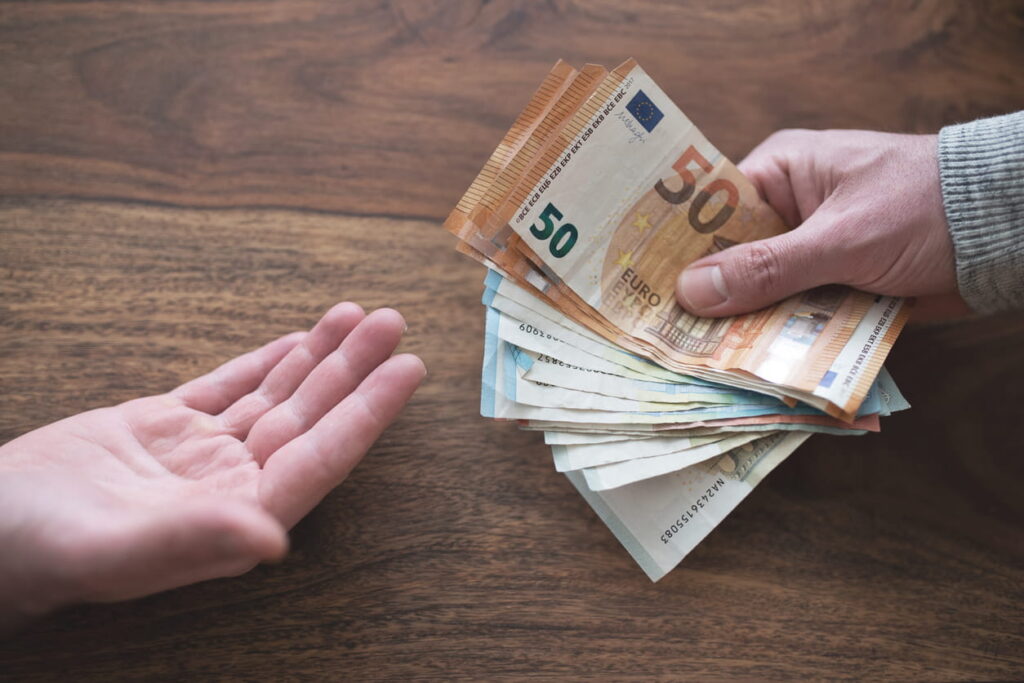
One of the most revealing experiments is the Ultimatum Game, where two participants are asked to divide a sum of money, let’s say €100. One decides how it should be split while the other can accept or reject the offer. If accepted, both receive the proposed amounts, but if rejected, neither gets anything.
Now, traditional economic theory suggests the second participant should accept almost any offer because even €10 is financially better than getting nothing at all. But humans don’t behave rationally.
When offered what they perceive to be an unfair share of that €100, people frequently reject it, even though doing so leaves them financially worse off. Think about that for a moment. We are sometimes prepared to punish ourselves financially rather than accept unfair treatment.
Neuroscientific research on the Ultimatum Game has also found that unfair offers activate the anterior insula, a brain region associated with processing unpleasant experiences and violations of expectations, while other experiments have identified measurable physiological responses to unfair exchanges.
Unfairness isn’t simply something we disagree with. We physically react to it.
Yesterday I missed a flight connection in Amsterdam because of a significantly delayed inbound aircraft from Luxembourg. While KLM would have booked me an airport hotel for the arising overnight stay (usually a bus ride away) I decided to book the airside Yotel in Schipol airport for a faster sleep. That way I could awake early the next day, not have to go through security, and be on my way.
10 minutes later, my magnificent executive assistant had found a better way and routed me through London from Luxembourg there and then. I no longer needed the Yotel in Schipol and so she went to cancel it. Even though it had been booked only 10 minutes previously, they stood over their ‘no cancellations within 24-hours’ and kept the full fee. “That’s not fair.”

No grace period. No understanding shown. And the result is that I was unlikely to ever use that facility or brand again. The veil is that thin. Fairness matters (see Yotel update at end of article!).
When the Rules Become the Enemy
Consider the controversy surrounding the sale of Oasis reunion tickets through Ticketmaster in 2024.
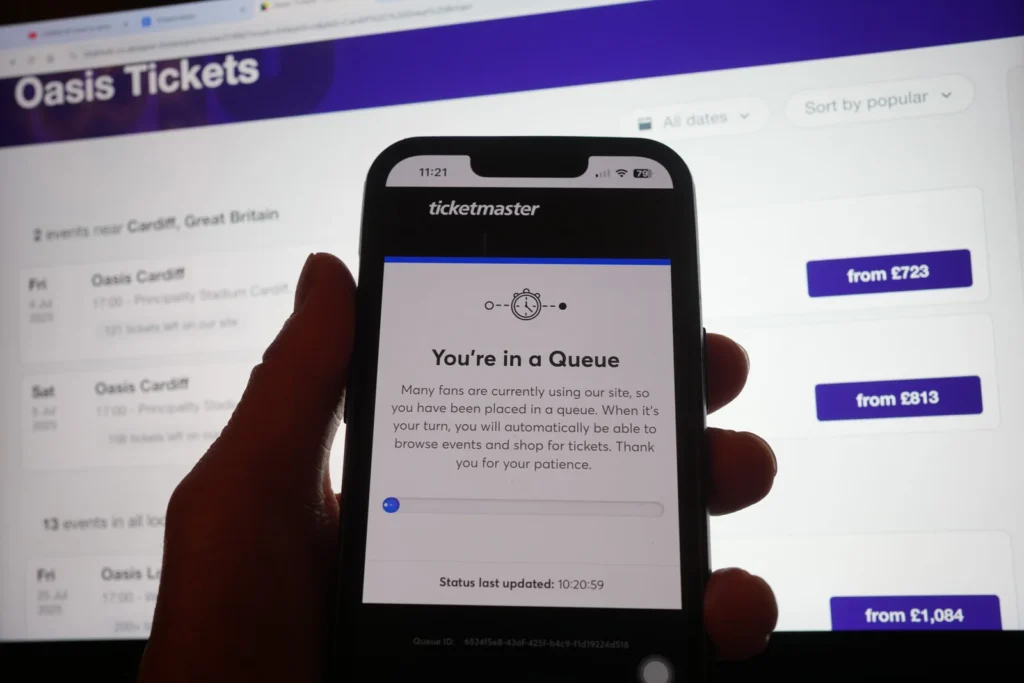
Thousands of fans spent hours waiting in online queues, hoping to secure tickets for a band many had waited fifteen years to see perform together again. When they eventually reached the purchasing stage, some discovered that available tickets were dramatically more expensive than anticipated. Prices advertised at €176 rose to €400 as customers waited in the on-line queue.
Both the UK’s Competition and Markets Authority and Ireland’s CCPC subsequently investigated the ticket-selling process and raised concerns about how pricing information had been communicated and executed.
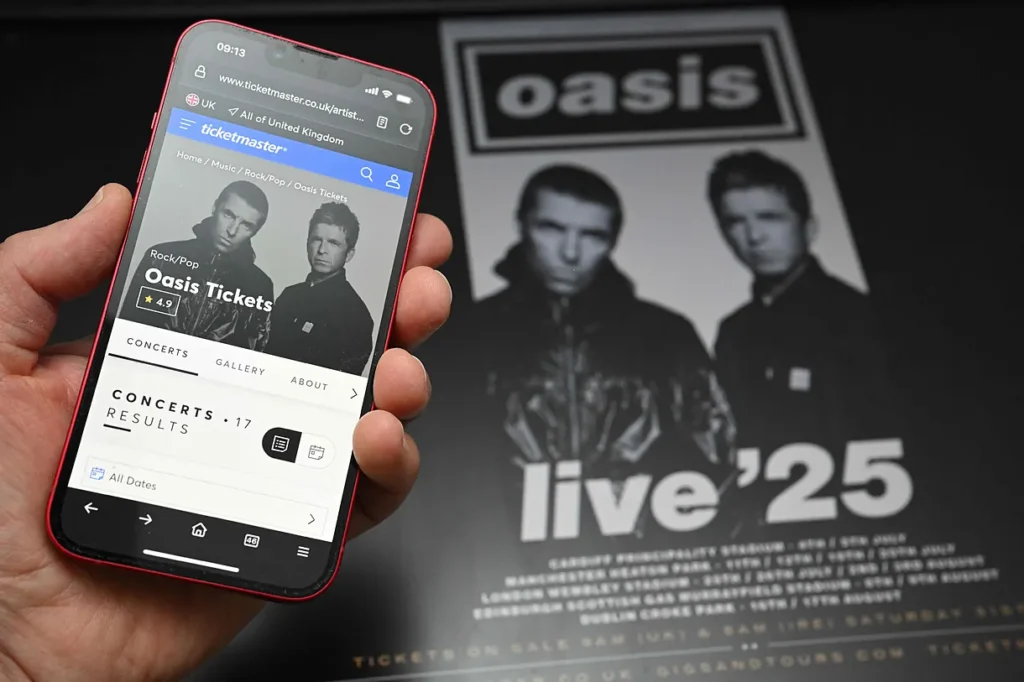
What interests me isn’t simply the rising price of the tickets, but the psychology of the fans. Imagine spending three hours in a queue, emotionally invested in seeing your favourite band, only to discover that the price you expected to pay now isn’t the price being offered.
The commercial explanation from Ticketmaster was ‘dynamic pricing’ (a polite way of saying ‘now that we have you excited and waiting in a queue to buy, we will significantly increase the price as we know you’ll be under pressure to pay it’) but the emotional interpretation is much simpler. “That is not fair.”
Many customers still bought the tickets because they desperately want to see Oasis, but purchasing under those circumstances should not be interpreted as loyalty. Indeed, sometimes customers continue transacting with a brand long after their emotional relationship with it has died.
That is perhaps the most dangerous form of customer loss because it remains invisible until a viable alternative appears.
Contractual Retention Isn’t Emotional Retention
Adobe offers another interesting example.
In 2024, the US Federal Trade Commission and Department of Justice brought a case alleging that Adobe had inadequately disclosed early termination fees and made subscription cancellation unnecessarily difficult. These were allegations rather than established findings, but the customer psychology they illustrate is fascinating.
Imagine happily using a product for years, only to discover that leaving the relationship is considerably more difficult and expensive than entering it.

Instead of feeling like a valued customer, you suddenly feel trapped. Gym memberships and broadband subscriptions often have the same. One last month’s hidden ‘cash grab’ if you try and leave.
Psychologists Edward Deci and Richard Ryan’s Self-Determination Theory identifies autonomy, our need to feel control over our decisions, as one of our fundamental psychological needs. Such restrictive cancellation journeys challenge that sense of autonomy, which helps explain why they can generate such disproportionate resentment.
A business might succeed in retaining someone’s subscription for another few months while simultaneously destroying any possibility of retaining their loyalty for another three years. In fact, you have probably created a monster in terms of peer-to-peer conversations.
Contractual retention is not emotional retention. Far from it. In fact, it is entrapment.

When Something Is Taken Away
Just as the Celts worried about the spirits taking them away, behavioural economists Daniel Kahneman and Amos Tversky demonstrated, through their work on Loss Aversion, that losses can carry considerably more psychological weight than equivalent gains.
A new feature might delight your customers, but removing an existing one can make them furious. Look at how upset the Spotify community got when Spotify just changed their logo. The backlash was so strong they quickly reverted to their recognised black and green.
We do not like to lose anything. And when a brand refuses to see your unique predicament, to hide behind their ‘terms and conditions’ and this results in a financial loss to the customer, then a brand will find itself in a horror movie of its own making.

“After everything I’ve invested in this brand, this is how they treat me?” That is the sound of the veil becoming thinner.
The Fairness Equation
So, what determines whether a customer perceives an experience as fair? Isn’t fairness quite a subjective thing?
Organisational psychology gives us a useful framework through the concept of Organisational Justice, which distinguishes between three types of fairness.
Firstly, there is Distributive Justice which concerns the actual outcome. Did I receive a fair refund or resolution? KLM refunded my full fare of that plane journey I did not take from Luxembourg due to their delay. It was their fault so that is fair.
Secondly, there is Procedural Justice that concerns the process. Was the decision transparent, consistent and reasonable, and did I have an opportunity to explain my circumstances? Yotel in Amsterdam were initially not interested in my unique circumstances (cancelling a booking made 10 minutes previously for the same day). They first chose to ‘hide’ behind procedure to optimise their profits and therefore lost a customer.

Finally, there is Interactional Justice that concerns how I was treated. Was I listened to and respected, or dismissed and made to feel insignificant? Again, Yotel’s first one-line response that said ‘these are our terms and conditions’ fails the interactional justice test.
This explains why two customers could receive the same financial outcome but still leave with completely different emotional responses.
Imagine two small business bank loan applicants, both of whom are rejected. The first receives an automated email: “Application Status: Declined.” Attached is then a standardised adverse action notice listing vague codes like “Ratio of debt to income exceeds threshold.”
The second receives a call from the loan officer personally to deliver the news. They explain precisely which ratio triggered the denial, walk through how the algorithm calculated it, and offer to sit down next quarter to review what financial adjustments would make the application successful on the next attempt.

Same outcome (an unsuccessful loan application), but completely different emotional experiences from the customer perspective.
Customers don’t necessarily need every decision to go their way. But they do need to believe the decision was fair and that they mattered within it.
The Loyalty Death Spiral
Perhaps we should start thinking about customer loss as something that happens psychologically before it happens commercially.
A customer encounters a problem and initially assumes the brand will resolve it, drawing on years of positive experiences and accumulated trust. Then the company refuses what the customer believes is a reasonable request, applies a policy without considering their circumstances or responds in a way they perceive as dismissive.

Suddenly what was previously a trusted brand becomes a company that doesn’t care, what was previously a minor inconvenience becomes evidence of a larger problem, and what was previously loyalty becomes conditional.
The customer hasn’t yet cancelled. They may not even complain again. They might even continue purchasing for a short while. But emotionally, they have checked out. As a brand, you have murdered the relationship, like a good Hallowe’en slasher movie.
It is rather like a relationship where two people still live in the same house, share the same bills and follow the same routines, despite one having emotionally left months earlier. From the outside everything appears normal, but inside something fundamental has died. Sometimes they both know it. Sometimes one is completely unaware.
As brands we are often in the dark as we are somewhat narcissistic, only interested in our own world (brand value, ROI, market share, profit). And so, when the divorce papers come, it is a complete shock.

This is why one of the most dangerous sentences in Customer Experience has to be: “Unfortunately, that’s our policy.”
Businesses obviously need policies, but policy should never become a substitute for judgment. There may be legitimate reasons why you cannot accommodate a customer’s request at that time, but there is a significant difference between explaining a difficult decision with empathy and simply hiding behind the rule.
Customers can often accept disappointment, but what they really struggle with is to accept indifference. We spend years telling customers that we care about them and want lasting relationships, then when that relationship is actually tested, we sometimes allow a rigid process to communicate precisely the opposite.
It is rather like telling someone you love them every day for ten years and then, when they genuinely need your help, explaining that unfortunately their request falls outside your terms and conditions. Good luck recovering from that one.
Bringing Customers Back From the Dead

The Halloween metaphor raises one final interesting question. Can a dead customer relationship be resurrected? What is the magic spell? Absolutely, but timing matters.
A customer who feels unfairly treated doesn’t necessarily need a grand gesture (although that helps), but they do need evidence that the organisation recognises what happened, understands why it mattered and is prepared to take responsibility.
Sometimes that means reversing a charge, making an exception or explaining a decision more transparently, while sometimes it simply means having the courage to say “You’re right. We didn’t handle that fairly.”
There is something remarkably powerful about that admission because it acknowledges the customer’s experience and demonstrates that the relationship matters more than the organisation’s need to defend itself.

Leave it too long, however, and the customer eventually stops looking for a resolution and starts looking for an exit.
The Thin Veil
As we approach Halloween, I think the ancient Celtic idea of the thin veil provides a useful reminder for anyone responsible for Customer Experience.
We spend enormous amounts acquiring customers, building loyalty programmes, personalising interactions and calculating Customer Lifetime Value, often treating loyalty as though it were a financial asset that accumulates safely over time.
But loyalty is a living emotional relationship, continually reinforced through experiences of trust, respect and fairness, and a relationship that took ten years to build can be fundamentally altered in ten minutes.
The customer may still be standing in your store, using your app or paying their subscription, but emotionally they may already have crossed over. Before you know it, as a brand, you are trick or treating alone.

And perhaps those are the customers we should fear most this Hallowe’en, not the ones who leave loudly, complain publicly or demand their money back, but those who quietly stop caring, who no longer defend us, who become indifferent to our communications and eventually disappear without giving us the opportunity to repair the relationship. Ghosted by your own customers.
Their loyalty died long before their account was closed. We just failed to notice.
Customers can forgive mistakes, accept disappointment and even understand why occasionally we have to say no, but when they begin to believe that the relationship itself is fundamentally unfair, that their loyalty counts for nothing, or that the brand values its own rules more than the people it serves, something far more valuable than a transaction is lost.

So, this Hallowe’en, while the ghosts and spirits wander between our worlds, spare a thought for the customers wandering along that equally fragile boundary between loyalty and abandonment.
You may have spent years bringing them into your brand’s world. Don’t allow one unfair moment to send them into the next.
Connection is Everything.
YOTEL update – When my EA pushed back, they about-turned a day later and agreed to the refund. Sometimes it pays to argue back. I now feel fairly treated and will use their facility in the future. As I said, the veil is thin and you can crossover both ways.