For the last twenty years, we have been building a Dopamine Economy. One click, one swipe, one tap, immediate delivery. And now with AI, one unquestionable, instant answer.
You’d like to watch a movie; the Netflix algorithm serves you one you’ll like immediately. You want to listen to an album or song; Spotify gives you instant access. You’re hungry; Uber Eats brings it to your door. Fancy a date? Swipe right and see who is available tonight. And if you need a tiny dopamine hit while waiting for your coffee, TikTok or Instagram will happily provide forty of them before your barista has even had the time to misspell your name on your cup.
Compulsive smartphone use has arguably created the greatest convenience revolution humanity has ever experienced, and we now have an entire generation of consumers who expect everything immediately. Yourself included.
Appropriately, brands and businesses responded accordingly.

Digital Transformation became the corporate religion of the last twenty years. When I started professionally speaking 15 years ago, most internal company events were focused on DTJ – the company’s Digital Transformation Journey. Remove friction, digitise, make it seamless, instant and personalised. Lose the legacy approach and launch an app. Apps were the new elixir of life. You were nobody unless you had an app.
At that time, Convenience became competitive advantage. It was the ticket-to-win. Be faster and frictionless and you will outpace your competitor.
But we are approaching an interesting inflection point as Artificial Intelligence is already commoditising much of that advantage. Soon every reasonably competent business, even the mom & pop laundrette on the corner, will have the capability to answer every customer instantly, personalise the interaction using enormous amounts of data, predict what they need next and resolve complex service issues autonomously.
What happens your business proposition when every brand interaction a customer has is convenient, personalised and instant? It becomes the expected, the norm, these things become the ticket-to-play, not the ticket-to-win.
The next great Customer Experience economy will therefore be built around something very different. Not the dopamine rush of instant. It will be built around belonging.
Welcome to the Age of the Oxytocin Economy.
From Wanting to Bonding
We need to be a little careful with the neuroscience here, because popular culture has done to neurotransmitters what LinkedIn has occasionally done to leadership theory, simplifying something incredibly complex into a nice little infographic and losing its power.
Dopamine isn’t simply the “pleasure chemical”, just as oxytocin isn’t simply the “love hormone”. It is a good shortcut for understanding but the actuality is more nuanced.
Dopamine plays an important role in motivation, learning and reward-seeking. Neuroscientist Kent Berridge’s influential work distinguishes between liking something and wanting it, suggesting dopamine is particularly important in creating the motivational pull that makes us pursue a reward, an anticipatory driver.
Through that lens, suddenly the last twenty years make a lot of sense.

Refresh. Swipe. Click. Scroll. There is always another notification, another reel, another YouTube short, another Bumble match, another parcel on its way, or the possibility that something rewarding is waiting beyond your next swipe.
The building mechanics of the Dopamine Economy are now moving beyond behavioural theory and concern and into our courts and regulatory system. In 2026, major legal and regulatory actions against Meta, Google (YouTube), TikTok and Snapchat increasingly focused on how the platforms themselves are designed to keep us there.
Features including infinite scroll, autoplay, unpredictable notifications, personalised recommendation algorithms, streaks and public validation metrics have been scrutinised as mechanisms capable of encouraging compulsive engagement.

The psychology is relatively simple: remove the natural stopping points, introduce unpredictable rewards and keep the brain anticipating what might appear next. It is much closer to the behavioural mechanics of a slot machine than a conversation with a friend. And therein lies the paradox. We arrived on social media looking for human connection, belonging and validation, but the platforms turned that desire for connection into a continuous cycle of anticipation and reward. We came looking for people. We stayed for the dopamine.
Oxytocin, however, operates in a very different psychological space.
Produced primarily in the hypothalamus, it has well-established physiological roles in bonding and trust development. In humans, oxytocin is released across three major moments:

- Physical Touch and Intimacy. In childbirth and lactation, oxytocin surges to cement the immediate neurochemical bond between mother and infant. It also spikes with skin-to-skin contact, hugging for 20 seconds or more, and with general physical intimacy (holding hands, massage, and specifically with orgasm, where it deepens emotional attachment and post-intimacy calm).

- Social & Emotional Connection. We release oxytocin when having deep and vulnerable conversations, from significant and sustained eye contact, and with acts of generosity and gift-giving (interestingly to both parties, not just the receiver).
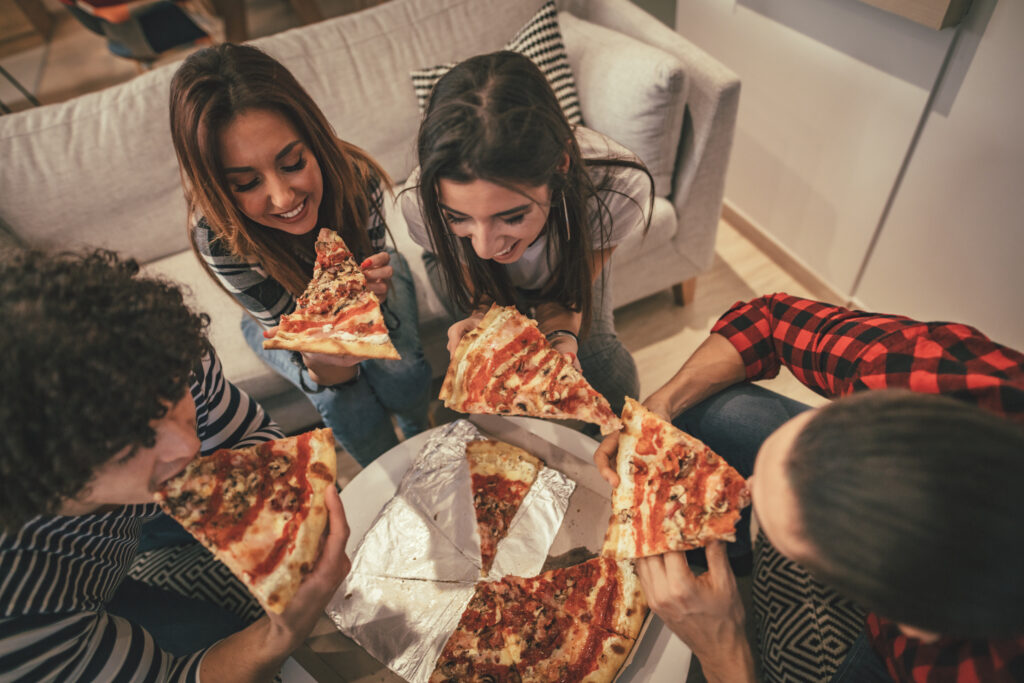
- Collective & Sensory Experiences. We also produce oxytocin when sharing a meal together (which is why communal dining has anchored human trust across every culture), and singing/dancing/moving in-sync, triggering simultaneous releases of oxytocin and endorphins, creating a powerful sense of collective “effervescence” or unity. Think sporting events or a Taylor Swift concert.
The common denominator of this wonderful hormone release is that it is deeply involved in social behaviour, including affiliation, attachment, social recognition and bonding.
It isn’t a magic love potion, and its effects are considerably more nuanced than the popular “cuddle hormone” description might suggest, but oxytocin appears to help make social information matter.
It is involved in bonding, which is what every brand loyalty strategy on the planet is ultimately trying to achieve.

Not All Connection Is Biologically Equal
In a previous article I spoke about Social Presence Theory, the idea that communication feels more human and socially meaningful in-person, the idea that digital connection and human connection are not biologically equivalent.
A 2026 review in Neuroscience & Biobehavioral Reviews specifically examined oxytocin and interactive (social) media and proposed that face-to-face interaction can stimulate oxytocin responses associated with social bonding and stress reduction, while text-based communication may produce responses comparable with no-contact conditions.
Earlier experimental research found something similarly fascinating. Young girls who had undergone a stressful experience showed oxytocin responses when comforted through physical interaction or by hearing their mother’s voice, whereas instant messaging did not produce the same effect.
Two studies pointing to the same result. Simply put, we don’t get that bonding hormone release playing with our smartphones. We get it in real life. That is where loyalty lies.

Think about what we have progressively removed from interpersonal communication over the last twenty years: touch, proximity, eye contact, facial expression, tone, smell and physical synchronisation. All those wonderfully messy analogue human signals our species spent hundreds of thousands of years evolving to interpret.
The science is still developing, and oxytocin is notoriously difficult to measure, so I wouldn’t suggest that every coffee with a friend gives you an oxytocin orgasm while chatting on WhatsApp leaves you biologically barren. But the question is fascinating and the opportunity for brands is obvious.
Trust Me
There is another reason oxytocin is particularly interesting from a Customer Experience perspective, and that is trust.
Trust is one of the fundamental pillars of any relationship. Friendships, romantic relationships, families and communities all depend upon it, and ultimately businesses do too. Loyalty without trust is just habitual purchasing behaviour.

In 2005, researchers Michael Kosfeld, Markus Heinrichs, Paul Zak, Urs Fischbacher and Ernst Fehr published a fascinating experiment in Nature entitled “Oxytocin increases trust in humans.” (sidebar: The fact that it took five academics to publish the study begs the question if they didn’t trust each other?)
Participants played a financial trust game where one (the ‘investor’) decided how much money to give another player from their own fund, knowing that the other person could either then share a multiple of what they were given back to them, or potentially exploit their trust and just keep the donation.
Among participants given oxytocin (by nasal spray), 45% demonstrated the maximum level of trust, compared with 21% receiving placebo, while the average amount entrusted to the other person was 17% higher.

Oxytocin specifically increased willingness to accept social risk within an interpersonal interaction. The researchers suggested one explanation might be reduced betrayal aversion, our reluctance to make ourselves vulnerable to another person because they might let us down.
And vulnerability is central to customer relationships.
I trust an airline to get me home, a bank with my money, a hotel with my family holiday, a doctor with my health and an insurer to be there when something goes badly wrong. Every meaningful customer relationship contains vulnerability, and every time an organisation honours that trust, the relationship strengthens.
If you were to look at is as some kind of commercial sequence, it would be:
‘Initial connection creates the conditions for trust, trust allows vulnerability, honouring that vulnerability strengthens a relationship, and relationships create loyalty.’
Read the five emphasised words above again. You can see that our digital transformation and dopamine economy of the past isn’t going to do us many favours. Loyalty is far more layered, emotional and interesting than collecting ten stamps and getting a free coffee.

Eight Hours Connected to What?
Now consider what has happened socially alongside this digital revolution of the past 20 years.
The 2026 Common Sense Media Census found that a typical American teenager spends around eight hours every day consuming entertainment screen media, excluding schoolwork, with 43% spending ten hours or more. In the EU, the data reads 4.5 hours daily during the week and 6 hours at the weekend.
For perhaps the first time in human history, an entire generation has been raised inside an environment capable of supplying almost continuous novelty, entertainment, stimulation and reward. But alongside that extraordinary digital connection sits another set of statistics. Let’s look at some actual data.
The World Health Organization estimates around one in six people globally experience loneliness, with adolescents reporting the highest rates at around 21%. In fact, 25% of all US teens report chronic loneliness,16% in the EU.
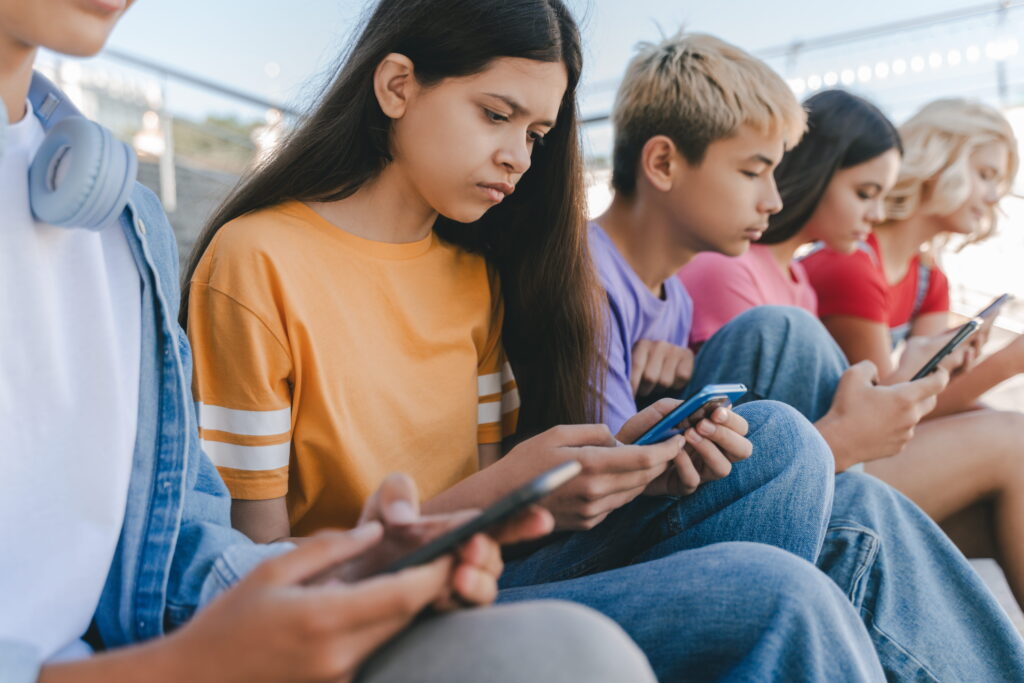
A 2026 Child Mind Institute study found nearly half (47%) of all US teenagers surveyed reported moderate to severe loneliness. Most revealingly, 88% said spending time with peers in person helped them to feel connected.
CDC data adds another layer. Among American teenagers spending four or more hours a day on non-school screens, 26% reported recent symptoms of depression compared with 10% among those below four hours, while anxiety symptoms were reported by 27% compared with 12%.
Correlation isn’t always causation, of course. Young people experiencing anxiety or loneliness may retreat into screens precisely because they are struggling, and digital platforms can provide genuine communities and support. But the cultural paradox is difficult to ignore.
We have never had more ways to connect, yet we seem increasingly worried, lonely, sad and disconnected.

And Now We Are Removing the Human Altogether
And into all of this, AI arrived.
At first, we asked it to write an email, create an image, or help with homework research. Now something much more interesting is happening. We are beginning to outsource relationships.
That same Common Sense Media study in 2025 found that 72% of US teenagers had used AI companions, with a third using them for some form of social interaction or relationship, including friendship, emotional support, romantic interaction or conversation practice. Around one-third of teen AI-companion users said they had discussed important or serious issues with AI instead of a real person.
AI therapy is growing too, with patients using agents and chatbots for mental-health support, friendship and intimate relationships.
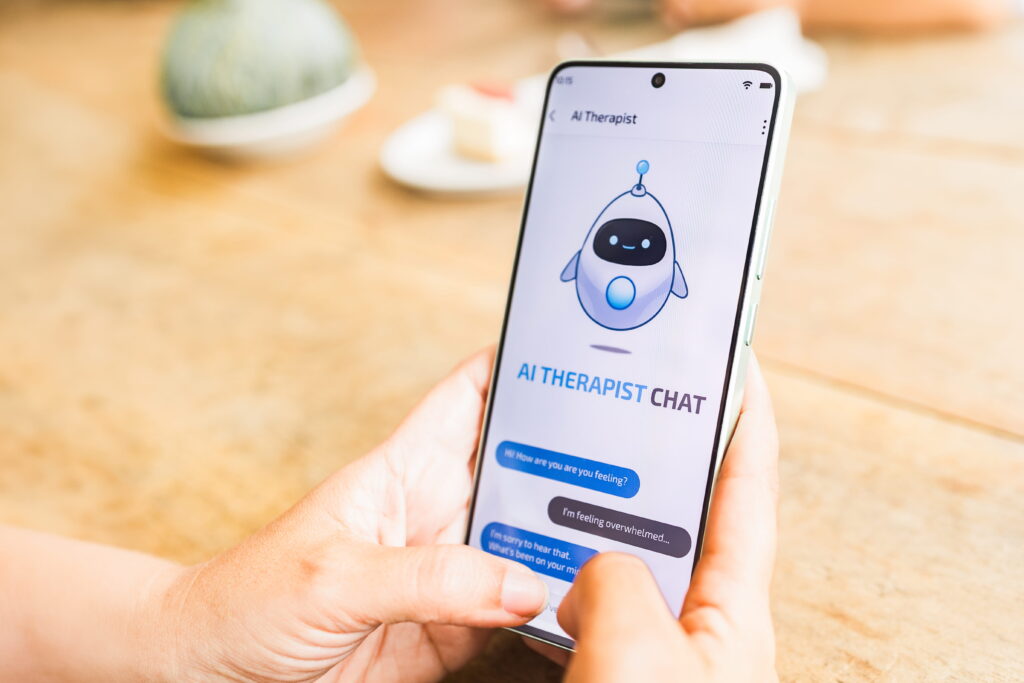
AI is interviewing us for jobs, meaning that one of the fundamentally human moments in our working life, meeting the people you might spend forty hours a week working alongside, can now begin without another employee from the organisation even being present.
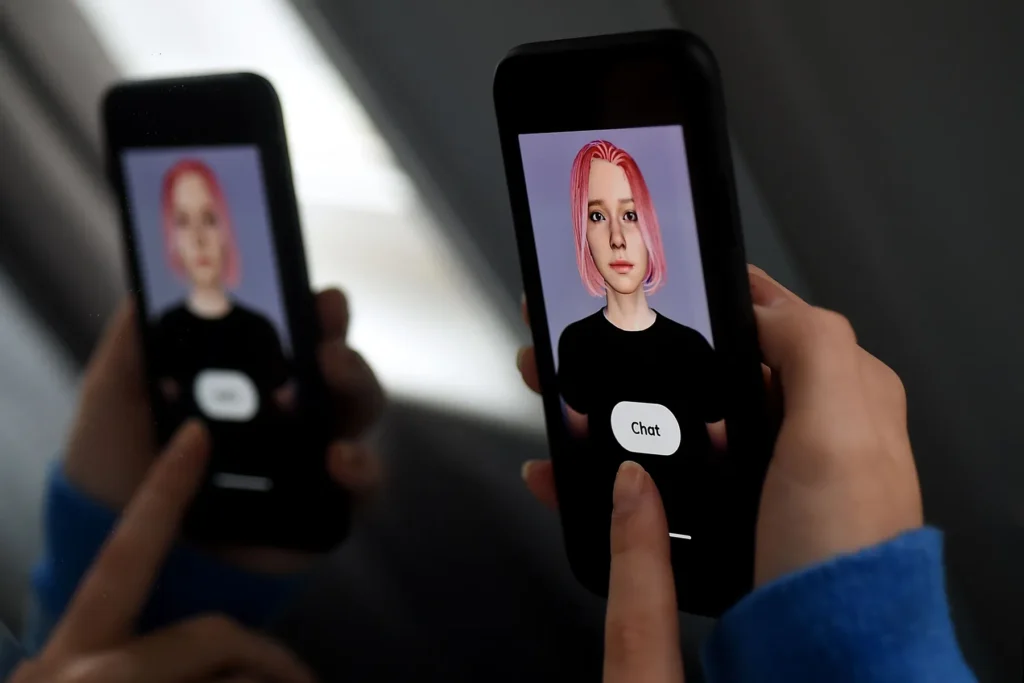
Then there are the AI griefbots, where AI can be trained on the messages, photographs, voice and digital remains of someone who has died, allowing relatives to continue interacting with a simulation of that person.
And inevitably AI is moving into romantic and sexual intimacy through increasingly sophisticated companion systems, virtual partners and embodied social and sex robots.
I will not make any moral judgement about any of the above, as some of these technologies may prove extraordinarily beneficial, particularly for people who are isolated or unable to access support. But culturally, something profound is unfolding.
We spent twenty years digitising our transactions and now we seem to be digitising our relationships.
The Great Disconnection Hypothesis
This leads me to a hypothesis.
Perhaps the next great human scarcity isn’t information, convenience, content or even personalisation. Perhaps it is genuine human connection. And the economist in me loves scarcity because scarcity creates value.
As we have already seen, because AI can produce unlimited content, human creativity becomes more interesting. In a world where AI provides unlimited answers, wisdom becomes more interesting. And so, as AI will provide unlimited synthetic conversation, genuine conversation becomes more interesting.
If I can have an infinitely patient AI companion who never gets bored, never forgets my birthday, laughs at my jokes and is available at 3.17am, perhaps the imperfect, unpredictable, occasionally irritating experience of being with another actual human becomes more valuable, not less. The authenticity, the unpredictability, the realness of it all.

Trust becomes more valuable too, and trusting another human involves risk. Relationships mean exposing ourselves to the possibility of disappointment, rejection and betrayal. An AI companion designed to please may offer emotional comfort, but part of what makes genuine relationships meaningful is that the person on the other side has agency.
They choose to show up for you, they choose to help you, they choose to care, and when another human, or organisation, repeatedly honours that vulnerability, trust deepens.
This is where the Oxytocin Economy proposition becomes commercially interesting.
The Reset to Real
Look around and I think we can already see the green shoots.

Eventbrite calls one of the defining trends of 2026 the “Reset to Real”. Its research found that 74% of Gen Z believe in-person experiences are more important than digital ones (well duh), while 46% are actively limiting screen time. Almost nine in ten young adults surveyed wanted events connecting them to their local community.
Match.com (also owner of Tinder and Hinge) have deliberately redirected product development and capital toward in-real-life (IRL) events, group social formats, and offline discovery after two years of declining paying subscribers.
Coffee raves are growing. Running clubs have become dating clubs, friendship clubs and social clubs. Craft circles are back. Pottery workshops, supper clubs, sauna communities, cold-water swimming, book clubs, poetry slams, board-game nights and sober social events are giving people reasons to gather.
Even the explosion in breathwork, meditation and wellness is connected to the same idea, although in a different direction. Connection with self. Connection with presence and purpose. Embodiment.
It is about feeling something rather than scrolling. Maybe after twenty years of Digital Transformation and convenience, as customers, we are beginning to crave something else.

From Consumption to Connection
This is where brands need to pay attention (I’ve put the ‘so what’ last to test your attention span!). The traditional marketing question used to be ‘How can we get customers to consume our product?’ The more interesting question for the Oxytocin Economy is now ‘How can our product help customers connect?’
Connection with friends, family, strangers, community, interests, purpose and themselves.
A running-shoe company is no longer simply selling footwear if it creates the running community where I meet my friends every Wednesday night. A coffee business isn’t simply selling caffeine if its stores become somewhere a community gathers. A craft retailer isn’t simply selling wool if it creates the knitting circle where someone who has moved to a new city finds their tribe.

In each case, the product becomes a Trojan horse for connection.
Brands such as Taylor Swift, Sephora (through their beauty insider community) CrossFit, Jeep (through Jeep Jamborees) and Harley-Davidson have understood fragments of this for years. They facilitate relationships between customers, not simply relationships between customer and company.
I can copy your product, and I can undercut your price. AI can replicate your recommendation engine, personalised email and increasingly much of your Customer Service.
But it is much harder to replicate the twenty friends I have made through your brand. Those experiences have also taught me that your organisation is trustworthy, leaving isn’t simply switching products. It means leaving a relationship, a much more hurtful switching cost.

Purpose Beyond Product
This brings us to what I think may become one of the defining questions for brands in the next decade. What human purpose exists beyond your product?
If you sell coffee, perhaps your purpose beyond product is conversation. If you sell fitness, perhaps it is confidence and community. If you sell travel, perhaps it is curiosity, adventure and shared memory. If you sell financial services, perhaps it is giving people confidence to trust you with their dreams of the future.
The strongest brands in the Oxytocin Economy don’t simply ask how their products can become faster, smarter or more personalised. They ask what relationships their products enable, what communities they create, what conversations they start, what memories they facilitate, what trust they earn and what sense of belonging they provide.
That is Purpose Beyond Product.
The Agentic AI Problem
And so, we arrive at what makes this urgent, the bedding in of Agentic AI.
Imagine a world, not very far away, where increasingly my AI buys on my behalf. It renews my insurance, books my flights, orders groceries, replaces my running shoes and compares my mobile-phone contract.
The machine can compare price, functionality, reviews, delivery speed and specifications in milliseconds, and it doesn’t care about your beautiful advertising campaign, redesigned logo or your influencer or celebrity endorsement.
So why should it choose you? Perhaps because I told it to.
“Always book me with that airline if the difference is less than €100.”
“Always buy that coffee.”
“Don’t move my insurance away from that company unless I ask.”
And why would I give my AI an instruction like that? Because I trust that brand, because it means something to me, because of all the good stuff. History. Identity. Belonging. Connection. Relationship.
Ironically, the things hardest to replicate and reduce to an algorithm may become the things that protect brands in an algorithmic economy.

From Digital Transformation to Connection Transformation
But of course, the Dopamine Economy isn’t disappearing. I still want my parcel tomorrow, my banking app to work seamlessly, and an immediate answer from customer service. I am certainly not volunteering to return to filling out insurance forms with a biro and mailing them somewhere. Convenience remains important, but convenience has become a hygiene factor.
AI will do the heavy lifting, remove the friction, anticipate needs, personalise service and create extraordinary levels of functional Customer Experience. Which leaves brands with a much more human challenge. How do you make people feel?
For twenty years, the boardroom conversation was about Digital Transformation. The next decade will be about Connection Transformation.
Moving from transactions to relationships, convenience to meaning, personalisation to intimacy, behavioural loyalty to emotional loyalty, and from customers consuming alongside one another to communities belonging together.
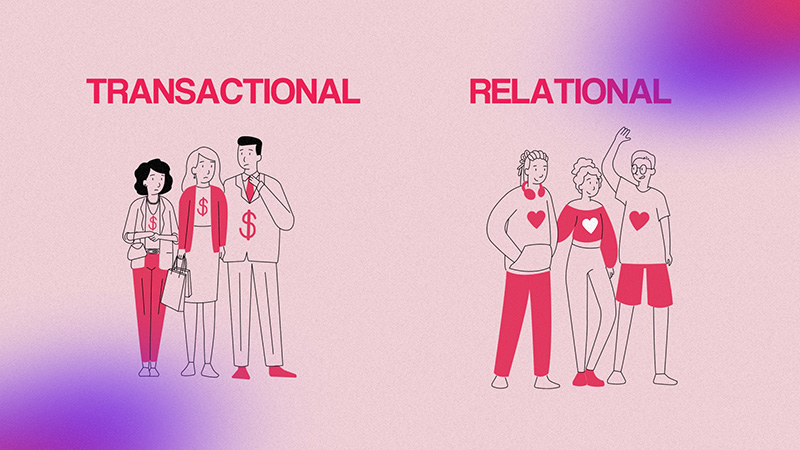
That Kosfeld study demonstrated something particularly interesting twenty years ago. Oxytocin didn’t simply increase participants’ appetite for financial risk; it increased their willingness to take an interpersonal leap of faith. And that is the real lesson here.
We spent the Digital Transformation era removing humans from transactions because doing so made everything faster and cheaper. The Oxytocin Economy now asks us to think much more carefully about where we put them back.
We put them back in deliberately, at the moments where connection, vulnerability, empathy, belonging and trust matter. Trust. Trust is where transactions begin to become relationships.
Relationships then become bonds and bonds become loyalty.
Loyalty creates something far more difficult for your competitors, or my future AI agent, to simply optimise away.

That is Purpose Beyond Product. That is the Oxytocin Economy.
Build your Trojan horse. If you aren’t facilitating connection and community then you might just be another dopamine hit in their already busy day, forgotten instantly in the next swipe.