
We tend to label a generation every 15 years. The Traditionalists were pre-1944. Baby Boomers 1950-1964. Generation X 1965-1979. Millennials. Gen Z. Gen Alpha and now Gen Beta. All 15-year increments.
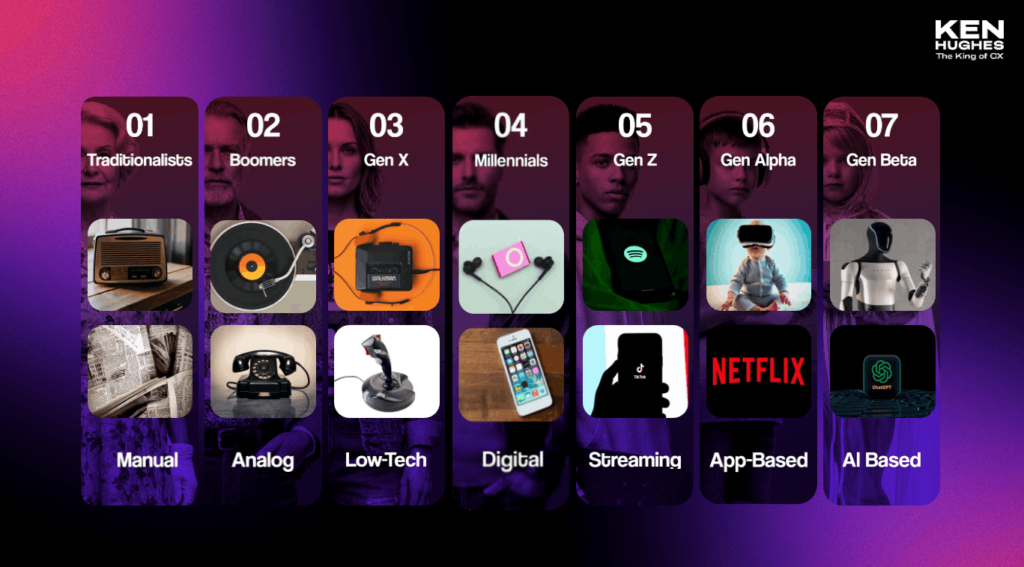
The problem is that real life rarely respects neat 15-year bands. Generations do not suddenly change their behaviour and social values or expectations in a single moment. Cultural and behavioural change is gradual, not instant. Values overlap and experiences blur.
Millennials were our favoured generation for a long time, the new kids on the block. They were the shift from analog to digital, the white-wire generation. They were young, a generation full of promise in their twenties, pre the 2008 economic implosion.
But the millennials are no longer ‘young’. Older millennials are past their mid-40s at this point. They have children aged 10 and 12 and greying hipster beards. What used to be a six-pack is now edging ever closer to a dad bod. They are no longer the cool kids they once were.
Gen Z then became the generation of promise. That’s where the energy of youth lies. They mocked the millennials overuse of emojis and their skinny jeans. But the younger Gen Z consumers are still in their late teens. Born in 2008/2009 some are still not old enough to vote, vape or drink (although they likely do plenty of the last two anyway).
There is an issue with wide 15-year age bands. Older millennials are very different to the younger millennials 10-years behind them. They were in their mid-20s by the time a smartphone found its way into their hands; their younger millennial counterparts were just teenagers when they held theirs.
Younger Gen Z customers (born 2008) had their teenage years dominated by Snapchat and TikTok. Their older Gen Z counterparts (born in 1996) had Facebook, and it was on a desktop. So, these strict 15-year bands ignore a lot of nuanced variance.
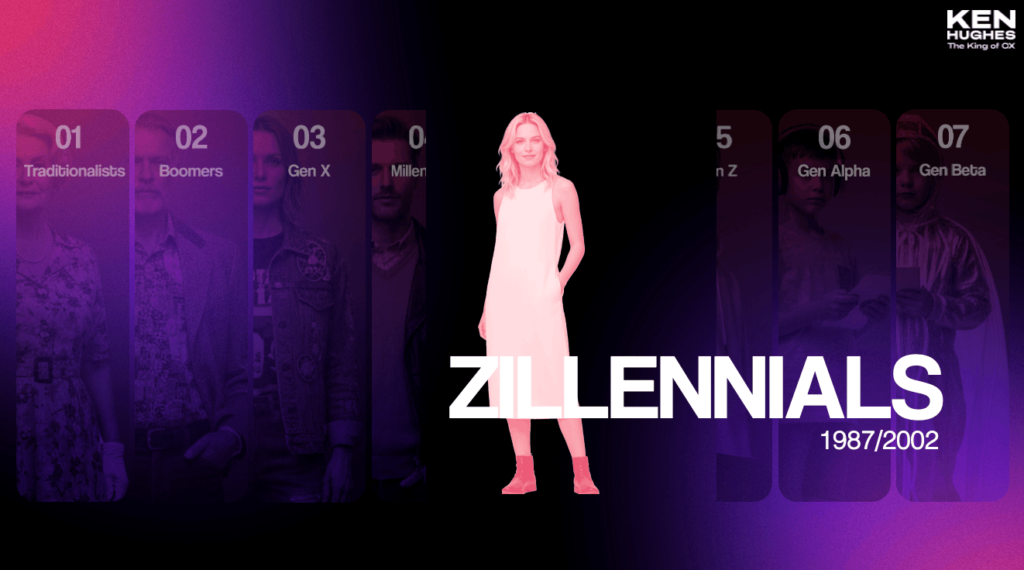
But if we slide that 15-year band along, landing it midway across those younger Millennials and the older Gen Z consumers, we get a new generation, one I am calling Zillennials.
Born between 1987 and 2002. They are effectively the younger half of the Millennial generation (born 1987-1994) and the older half of Generation Z (born 1995-2002). These two generational sub-segments have far more in common with each other than they have with their own generational counterparts. And more importantly, they represent a fascinating consumer segment that has quietly become one of the most influential groups in society, despite rarely being discussed as a distinct tribe. Currently worth €3.1 Trillion, this will rise to €5.5 Trillion by 2040.
The Zillennials are where it’s at.
What makes them interesting is the timing; that they experienced perhaps the most dramatic period of social, technological and economic change of any generation alive today.
Unlike the older Millennials, they did not spend their early adulthood adapting to digital technology. They came of age inside our forming digital reality. Zillennials music memorabilia are digital – CDs and iPods, not analog cassettes.

They enjoyed a pre-smartphone childhood but were heavy users of SMS. They rented DVDs before streaming arrived. They downloaded music from Napster and LimeWire before Spotify. They used MSN Messenger before WhatsApp, Facebook before TikTok, and lived through the rise of social media rather than simply inheriting it.
This matters because it gives them a unique perspective on technology.
They watched the internet become mobile, social media become culture, and AI become mainstream. As a result, they tend to be more digitally sophisticated than Millennials, but more sceptical than Gen Z.
They understand technology’s potential and convenience but also understand its costs.
But what can we learn from this Zillennial generation and what might that mean for how our brands leverage future opportunities to connect? Here are six significant attributes worth considering:
1 Delayed Adulthood – The Boomerang Children
The economic environment they inherited has been unusual.
Previous generations often followed a relatively predictable life script. Education led to employment which led to home ownership, marriage and family life. While not everyone followed that path, it existed as a broadly attainable roadmap.
For many Zillennials, that roadmap has become considerably harder to navigate. Many entered adulthood during or immediately after the global financial crisis. Others were just establishing their careers or college life when Covid arrived and they had to hit the reset button again.

Permanent employment became less permanent, and housing affordability collapsed. The housing crisis has also made renting expensive, resulting in Zillennials staying in the parental nest, or returning home to save.
In the 1980s, the average age of leaving home was 21 in the UK/Scandinavia and 26 in the Mediterranean countries like Spain, Italy and Greece. Young adults left their Southern European houses later due to many cultural factors. Personally, I think it was because English mothers fed their children frozen fish fingers and soggy chips (meaning they left as soon as they could), while the Spanish and Italian mamas fed their children homemade pasta and paella. It is what I like to call ‘Momonomics’ – why leave when your parents provide!
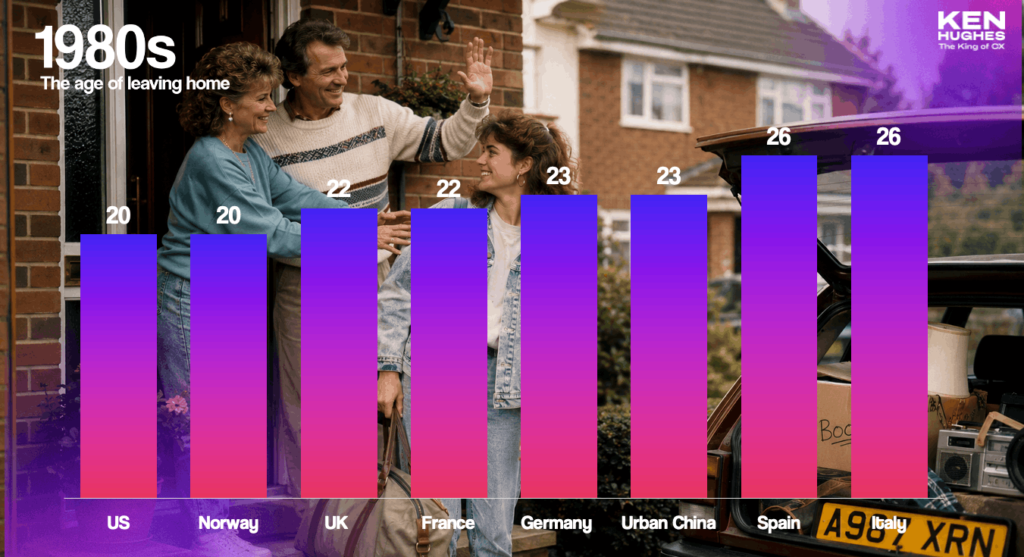
Flash forward to today and UK young adults now do not leave until 27, with their Spanish and Italian equivalents staying at home until they are 30.
The result is a generation experiencing what sociologists call “delayed adulthood.” They are reaching the traditional milestones much later. They buy homes much later, if at all. They have children later, if at all. They get married later, if at all.
These shifting norms and delays are part cultural shifts but also because the economics often dictate it, resulting in a fascinating tension. Zillennials are old enough to aspire to traditional markers of success, but young enough to realise that those markers may now no longer be realistic.
They are stuck between their aspiration and their adaptation to this new reality.

However, these shifts have a profound impact for many industries. With spiralling home ownership rates, the DIY industry doesn’t have any new homeowners to inspire around renovation or repair. The financial services industry has less opportunity to sell mortgages or pensions.
Delayed adulthood has a major effect on consumer spending.
2 The Access Economy – Imagine No Possessions
Where previous generations often used possessions to signal status and success (think the Nike swoosh of the 80s), apart from their iPhone, Zillennials increasingly favour experiences.

This is partly because experiences are more shareable in their social media world, but also because ownership itself has become more difficult. No generation has been sold the dream of ownership more aggressively, while simultaneously being priced out of it more effectively.
But it was technology that was the main catalyst. They stream rather than collect, subscribe rather than purchase, rent rather than own. Everything is becoming subscription based. In many respects they have become the first generation raised in an access economy rather than an ownership economy.
Spotify instead of an iPod, Netflix instead of cable TV and carsharing instead of car ownership.
From a branding perspective, this has profound implications for identity. For previous generations, possessions helped define who we were but for Zillennials, experiences increasingly perform that role. Identity has become experiential rather than material. Experiences are the new social currency.

“I’ve been there, I’ve done that, I’ve experienced this.” Instagram and economics killed ownership.
The automotive industry is hugely affected by this. Car ownership is less aspirational, replaced by ride share apps and autonomous mobility. The access economy has its downsides for corporate profitability.
3 Tribal Belonging = One is the Loneliest Number
Despite being more connected than any generation before them, many report feeling profoundly disconnected. Zillennials are pre-family, and although they possess thousands of digital connections, they often have fewer meaningful community ties.
Traditional structures that once provided belonging have weakened. Religious participation has declined and this generation relocate more frequently. Work has become more short-term, transient and remote employment has reduced many of the social interactions that once naturally occurred in workplaces. Digital dating removed their in-person experiences.

As humans, we evolved in tribes, but Zillennials find themselves living in networks. This distinction matters because a network provides access. A tribe provides belonging.
This helps explain why fandom has become such a powerful force in their modern culture.
Spotify Wrapped succeeds because it transforms music consumption into personal identity. Airbnb succeeds because it sells stories and possibilities rather than accommodation. Taylor Swift has built perhaps the most powerful fan community in the world by understanding that people do not simply want entertainment. They want connection, belonging and participation.
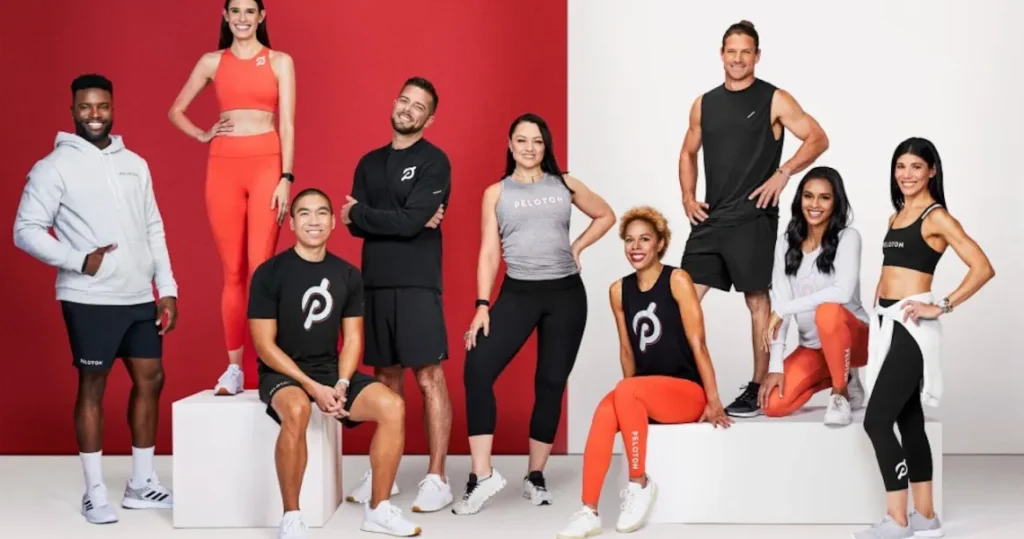
From fitness communities like Peloton to podcast audiences, gaming and online creator ecosystems, fandom has stepped into the belonging vacuum left by declining traditional communities. These groups offer identity, meaning and social connection, and provide answers to one of the most fundamental human questions: Where do I belong?
The brands winning with this audience are not simply offering functionality. They are creating identity, facilitating belonging and helping customers express who they are.
Remember, belonging is a core human need, and the brands that leverage their position and facilitate community and tribal belonging through their product or service form strong bonds of attachment with the Zillennial customer.
4 Wellbeing – Checking in before Crashing Out
Older generations often chased success. While that success is still aspirational (particularly in influencer culture), Zillennials increasingly chase meaning.

They want a work-life balance from the beginning. They prioritise mental wellbeing, something that is very evident in their language. Words like triggered, boundaries, toxic, self-care, mindfulness and trauma-informed are all part of their lexicon, words that were rarely used by previous generations. Wellness, mindfulness, self-development and therapy culture have all become mainstream.
They crave purpose and want to work for brands that have shared values with their own. They do not buy brands, they ‘invite them into their lives’.
They also have higher emotional intelligence and emotional expectations, both in their inter-personal relationships and in the workplace. EQ over IQ, empathy over efficiency.
The pandemic accelerated this dramatically with this generation particularly questioning what work was for, what success meant, and what actually mattered. The result is a generation less impressed by status symbols and more interested in emotional currency.

How does something make me feel? Does it align with my values? Does it contribute positively to my life? For Zillennials, emotional optimisation often matters as much as financial optimisation.
For brands, this opens an entire new conversational opportunity with consumers, alongside new attachment potential.
5 Flexibility – I Want to Break Free
While the earlier outlined economic pressures related to income explain some of the declining home ownership statistics, it is also driven by a cultural leaning-in to freedom and flexibility. Zillennials value flexibility because life has often been unpredictable.
This is what I call the ‘Tinderisation of Society’. This is a generation that ‘swipe left’ as soon as they feel it is time to move on. Coming of age inside the convenience, one-click/one-swipe world, freedom to roam is a key value. This is true in where and how they live (think ‘van-life’), how they work as freelancers, and in their personal relationships. Marriage, monogamy, alternative lifestyles, and freelance work are all evidence of this desire for flexibility and freedom.

For brands, this means that fixed-term contracts or strict terms & conditions no longer work. Zillennial customers expect flexibility and subscription pausing or gifting. Get this wrong and they will delete you from their consideration faster than unmatching their latest match on Hinge or Bumble.
6 Keeping it Real – Authenticity
This is a generation that prioritises authentic connection. They will frequent an independently owned coffee shop over Starbucks, a street-food experience over quick serve restaurants.
Zillennials value authenticity because they have spent two decades deeply immersed in marketing messages and influencer culture, becoming highly skilled at spotting anything that feels forced, performative or inauthentic.
They value transparency because they can fact-check your claims in seconds. They have a highly developed radar for insincerity. This is the generation that can spot performative brand behaviour from a mile away.

They can see your purpose washing, your rainbow capitalism, your forced and ‘fake’ authenticity, your corporate virtue signalling. They have seen it all and are rarely impressed.
Communicating with the Zillennial consumer requires a new corporate approach, one that genuinely puts people before profit, relationship ahead of ROI.
All of the above six factors have profound implications for customer experience, consumer spending and brands.
Many organisations continue to segment their customers through traditional demographic lenses, be that age, gender, income or geography. But what unites Zillennials is not their demographics but their psychology, their cultural outlook and expectations.

They increasingly expect brands to provide something more meaningful than products, and this is where Customer Experience becomes strategically important. The future of CX lies not in AI-fuelled operational excellence, but in emotional relevance.
They increasingly expect understanding. They want brands that recognise their context, appreciate their challenges and make them feel seen.
While this generation may be caught between Millennials and Generation Z, they are also forcing organisations to rethink what loyalty actually means. The brands that thrive with Zillennials will be those that understand the following.

People no longer buy products simply because they need them. They buy products, services and experiences because of what those choices say about who they are, their identity, and where they belong. Many brands still focus primarily on transactions, but Zillennials are looking for relationships.
In a world driven by agentic AI, quantum computing, autonomous interactions and humanoid robotics, belonging becomes increasingly scarce, which may be the most valuable thing any brand can provide.
In the future of branding and business, Connection is Everything.